IoT SIM for Container Tracking Across Ports and Borders: Procurement Guide from Pilot to Fleet
By jietion, Business Development (BD) at Quanqiu IoT · Published · Updated
Definition: In container tracking, an IoT SIM connects each tracker on a box, chassis or reefer unit to the tracking platform, carrying position, door and temperature events across ports, inland routes and borders under one managed contract.
Buy container-tracking connectivity in two stages. First run a pilot of a few dozen trackers on the real trade lanes, with a Global IoT SIM that works in every country on the route, and measure three things: where trackers fail to report, how much data each one really sends per trip, and how long boxes sit idle between trips. Then write the fleet contract around those numbers. Most expensive mistakes in container projects come from skipping the pilot and pricing a fleet on a vendor’s data estimate, or from discovering after rollout that one transit country restricts long-term roaming SIMs.
Why containers break the assumptions of ordinary fleet SIM plans
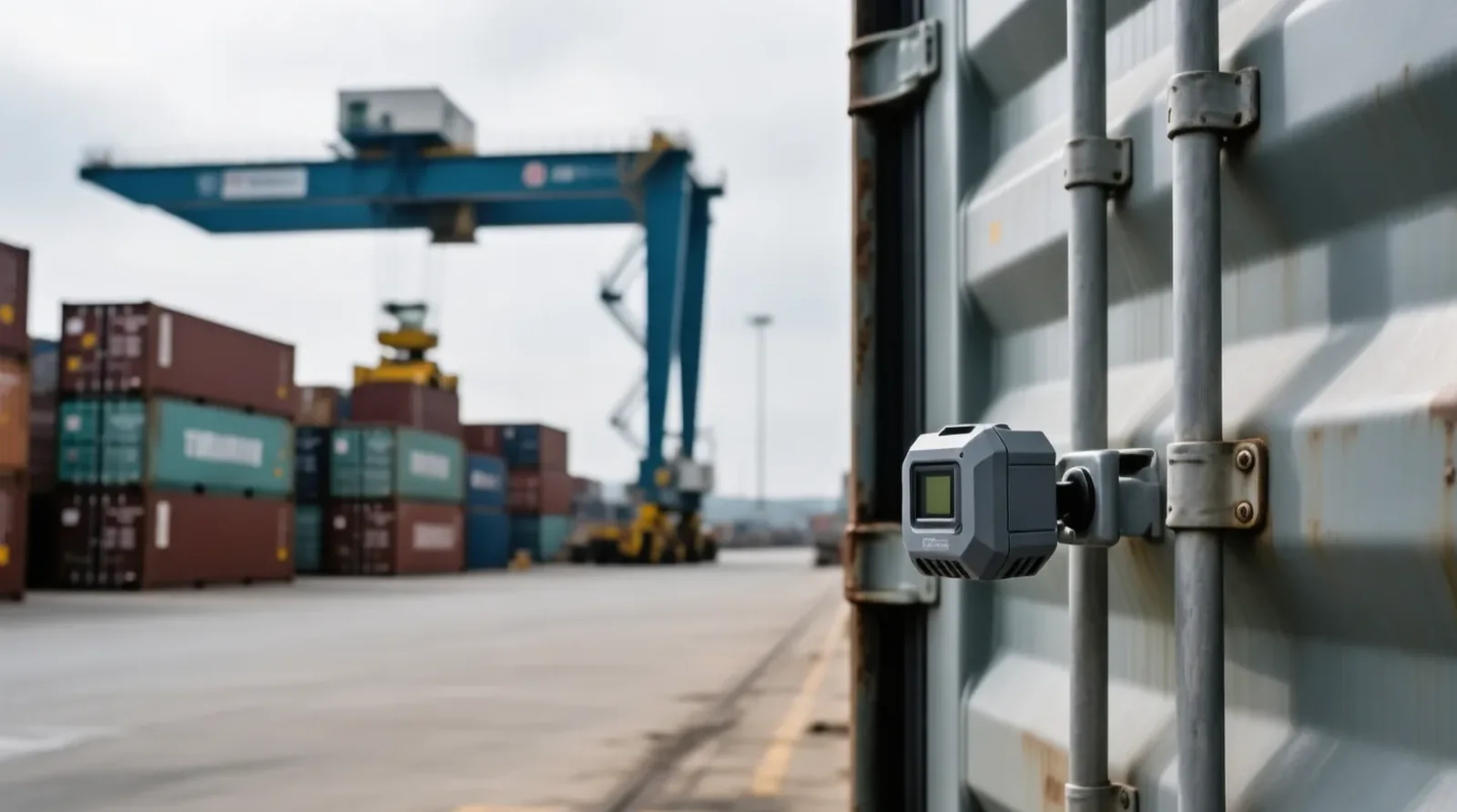
A truck tracker drives in a known region, has vehicle power and reports all day. A container tracker does none of that reliably. It may spend two weeks at sea with no terrestrial coverage, sit in a stack where steel boxes surround the antenna, cross three countries on a rail leg, and then wait in a depot for a month. Most units run on batteries, so every network attach costs energy. That profile is why the GSMA describes its Mobile IoT technologies, LTE-M and NB-IoT, as licensed low-power wide-area networks for devices that are low cost, send little data, need long battery life and often sit in remote or hard-to-reach places. For container buyers it also means that availability of LTE-M or NB-IoT roaming in each country, not just LTE coverage, decides whether a battery tracker reports at a border yard.
Our broader guide to GPS tracker fleet procurement and multi-country device operations covers vehicle trackers. This article focuses on what changes when the asset is a box rather than a truck.
What container trackers actually report, from GPS to door and cargo events
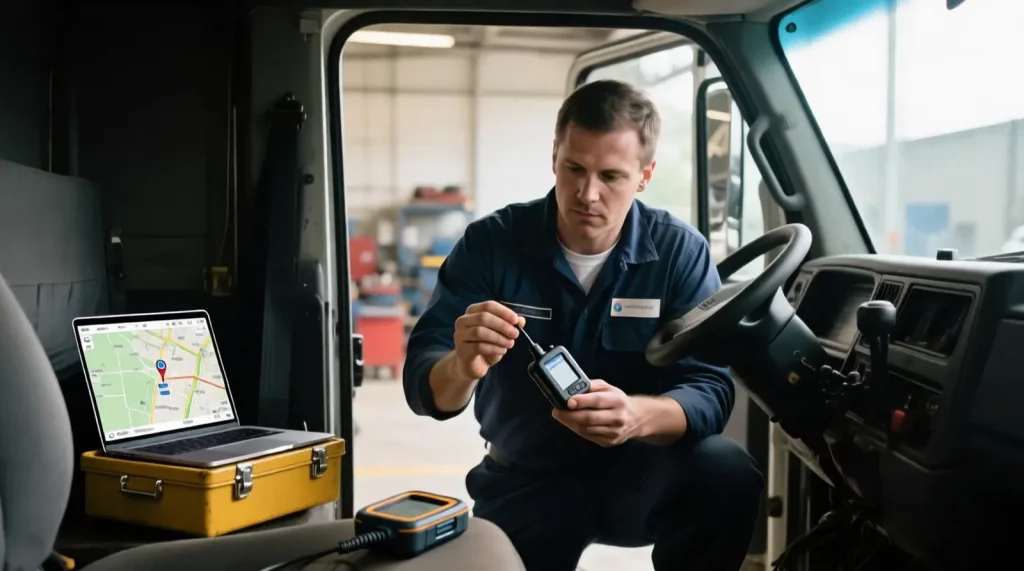
The basic tracker architecture has not changed much in a decade. A 2018 design for logistics tracking used vehicle-mounted GPS locators that sent position and load status over GPRS to a central management platform, which then served drivers, shippers and the logistics company through a web interface with permission levels (Dong, 2018). Earlier still, a prototype vehicle monitor combined a GPS module with a GSM module and sent position by text message to a phone (Dan et al., 2016). Designs like these are worth recognising when you audit an existing fleet: anything that depends on 2G or 3G needs a replacement plan before the networks on its route are switched off.
Modern projects add cargo-level events. In a tobacco distribution system tested in Wuhan, each vehicle carried an ARM host with 3G and GPS modules, an RFID reader and four antennas, so every item could be scanned in transit; an infrared switch at the door activated a door antenna to verify loading and unloading (Wei et al., 2015). A 2026 cold-chain design used passive RFID temperature tags without batteries, read within about 5 m by an ESP32 controller, and uploaded fused GPS, motion and temperature data over MQTT (You et al., 2026). The same study notes that 63% of temperature-control failures in the cases it reviewed came from open handling at the last mile (You et al., 2026). Door-open and temperature events are small messages, but they are the ones a cargo owner will dispute if they arrive late or not at all.
Older trailer and container trackers built on 2G modules face the same network closures; see 2G and 3G Shutdowns for GPS Trackers: Migration Planning, SMS Continuity and Roaming Checks.
Pilot design: which routes, how many units and what to measure
A useful pilot covers the worst parts of the route, not the easiest. Put trackers on boxes that pass through the main port terminals, the inland rail or truck leg, every border crossing on the lane, and the depot where empties wait. A few dozen units over two or three full round trips usually show the pattern; the right number depends on how many lanes you run. Log for each report: country, operator, radio technology, signal quality and whether it was sent live or from a buffer. Trackers should store events with their own timestamps during sea legs and coverage gaps and send them on reconnection, and the platform must accept late, out-of-order data.
| Item to specify | Pilot stage | Fleet stage |
|---|---|---|
| Countries and operators | Every country on the tested lanes, with the operator each tracker attached to | Confirmed list per lane, including permanent-roaming limits |
| Radio technology | Record LTE-M, NB-IoT, LTE and 2G fallback separately | Fixed in the device specification; no 2G/3G-only modules |
| Data per trip | Measured from SIM usage, including firmware updates | Pooled plan sized from pilot data plus a margin |
| Idle months per box | Measured from depot dwell time | SIM lifecycle states and billing for inactive units: to be confirmed during project validation |
| Reporting interval | Tested against battery drain | Set per cargo type; event-driven for door and temperature |
| SIM format | Physical industrial SIM or eSIM, matched to the module | eSIM where a local profile may be needed later |
Roaming, idle time and other contract terms that decide total cost
Three contract questions change the fleet price more than the per-megabyte rate. The first is roaming rules. Some countries restrict foreign SIMs that stay on their networks permanently, and an operator may cut such SIMs off after a period. A container lane that passes through such a country needs a local profile or a specific agreement, which is a project-quote item. The comparison of Global IoT SIM vs roaming SIM vs local SIM for cross-border rollouts explains the trade-offs. The second is idle time. Boxes that sit empty for weeks still hold a SIM, and how that SIM is billed while inactive matters at fleet scale. The third is pooling: individual trackers vary widely from trip to trip, so a shared data pool across the fleet usually fits better than a fixed allowance per SIM. The Global IoT SIM pricing guide shows how catalog plans are structured.
Ask also how the supplier handles SIMs at scale: bulk activation at first network attach, suspension of lost or damaged trackers, and usage alerts when a unit starts sending far more than normal. A tracker stuck in a reboot loop can use up a monthly allowance long before anyone notices. In a CMP these are routine actions; done by email, they are a weekly support burden.
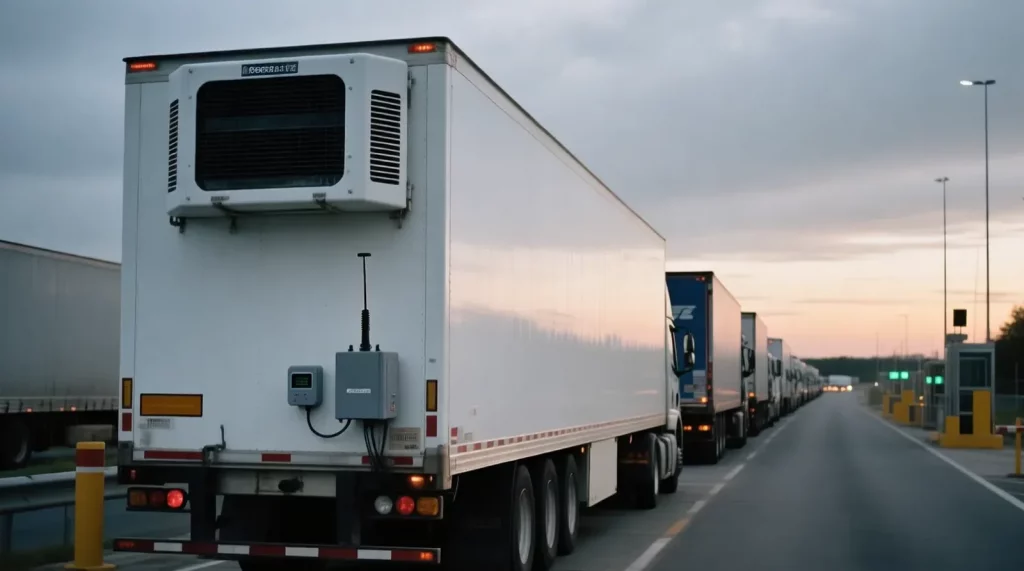
Refrigerated trailers add a temperature record to the same roaming questions; our guide to cold-chain truck monitoring across countries covers permanent-roaming limits, local profiles and data for reefer units.
Where an IoT SIM does not solve the problem
Connectivity carries data; it does not make a tracker report through a steel stack or across an ocean. Mid-ocean positions need satellite connectivity or ship-side gateways, and the economics of those are a separate decision. Battery life is set mostly by the reporting interval and by how often the tracker has to search for a network, so a poorly chosen interval drains units regardless of the SIM. Positioning accuracy depends on the GNSS module and antenna. Customs rules, cargo-security seals and data-sharing agreements with shipping lines sit outside the SIM contract. Coverage at specific terminals, operator choice and LPWA roaming availability on each lane are confirmed during project validation, not assumed from a coverage map.
How Quanqiu IoT supports the step from pilot to fleet
For a pilot on one or two lanes, Global IoT SIM country plans in the catalog are a quick way to get units reporting. Move to a project quote when the fleet covers several lanes or regions, when a country on the route restricts permanent roaming, when you need eSIM so a local profile can be loaded later, or when you want pooled data, lifecycle states and usage alerts across thousands of trackers in a CMP. Send the lane list with ports and border crossings, the tracker and module models, the reporting design and battery target, measured data per trip from the pilot, and the expected fleet size over two years.
FAQ
How much data does a container tracker use per month?
It depends on the reporting interval, event types and firmware updates. Position and event messages are small; frequent updates or image capture change the picture completely. Use the SIM usage measured in your pilot rather than an estimate.
Do container trackers need LTE-M or NB-IoT, or is LTE enough?
Battery trackers benefit from LTE-M or NB-IoT, but roaming support for these technologies varies by country and operator. Many projects use modules that support LTE-M with LTE or 2G fallback; the right mix is decided from pilot data.
What happens to tracking data during a sea voyage?
Without satellite or ship-side connectivity the tracker cannot report. Specify trackers that store events with timestamps and upload them on arrival, and a platform that accepts late data.
Is eSIM worth it for containers?
It is worth considering when lanes pass through countries that may require a local profile, because the profile can then be changed without touching the tracker. Confirm module support before ordering.
What do you need from us to prepare a fleet quote?
The lanes with ports and border crossings, tracker and module models, reporting intervals, pilot usage data, idle time per box, and the fleet size you expect over the next two years.
Official References
- GSMA: Internet of Things
- GSMA: Mobile IoT (LPWA) initiative
- Wei Chunmei, Hu Jinfan, Tang Shenglin (2015). Logistics Tracking and Monitoring System Based on Mobile Internet of Things Technology (in Chinese). 物流技术, 34(6), 267-269. https://doi.org/10.3969/j.issn.1005-152X.2015.06.081
- You Yuhang, Xiao Shungen, Chen Ziqi, Xue Chenxin (2026). Design of a Logistics Tracking System Based on Passive RFID (in Chinese). 机电信息, (13), 33-37,43.
- Dong Xiao (2018). Analysis of the Application of GPS-Based Embedded Locators in the Internet of Things (in Chinese). 信息系统工程, 45-46.
- Dan Yongping, Jiang Chenglong, Chang Baolei (2016). Design of an Intelligent Vehicle Travel Monitoring Instrument Based on GPS (in Chinese). 自动化应用, (9), 63-65.