Global IoT SIM vs Roaming SIM vs Local SIM for Cross-Border Device Rollouts
By jietion, Business Development (BD) at Quanqiu IoT · Published · Updated
Definition: A global IoT SIM attaches to partner networks in many countries under one contract, a roaming SIM relies on its home operator’s roaming deals, and a local SIM is a domestic subscription in the installation country.
For devices that move between countries or are installed in several of them, a global IoT SIM or an eSIM with downloadable profiles is usually the easiest to operate. A local SIM is often the safer choice for devices that stay for years in one country where long-term roaming is restricted. A consumer roaming SIM is rarely the right tool for a fleet. The decision turns on three questions: how long each device stays abroad, whether the destination countries accept permanent roaming, and who will manage the SIMs once the devices ship.
How each option connects
Every SIM carries an IMSI made of a mobile country code, a mobile network code and a subscriber number, as defined in ITU-T Recommendation E.212. The network that issued the IMSI is the home network; any other network the device uses is a visited network, and traffic is handled under a roaming agreement between the two.
A global IoT SIM is a roaming SIM built for machines. The issuer signs agreements with several networks per country, often with both steered and unsteered access, and bills data from one contract with one management platform. Some global SIMs use an IMSI from the shared international code 901 that E.212 reserves for networks without a single home country; others use a national code. A roaming SIM in the ordinary sense is a domestic or consumer subscription used abroad. Its partner list, prices and fair-use limits are designed for travellers, not for devices that stay away for years. A local SIM attaches to its own home network in the installation country, so no roaming agreement is involved at all.
An eSIM changes the logistics rather than the commercial model. The eUICC can hold a global profile at the factory and download a local profile later, so the same hardware can start on roaming and move to local service where that is required. The eSIM versus physical SIM guide for OEMs covers what that means for manufacturing and field replacement.
How the SIM identity, the partner network list and the 2G/3G switch-offs decide whether a global SIM works in a given country is explained in Global IoT SIM: how it works and how to choose one.
Permanent roaming: the question to settle first
Permanent roaming means a device uses a visited network for months or years rather than during a trip. Roaming rules were written for travellers. In the European Union, Regulation (EU) 2022/612 provides “roam like at home” for periodic travel and lets operators apply a fair-use policy, so long-term machine use depends on commercial agreements between operators rather than on the regulation itself. Outside the EU, some operators and regulators limit or refuse permanent roaming, and the position can change after a device has shipped.
Ask the provider in writing, country by country: is permanent roaming accepted on each partner network, which networks may the device attach to, and what happens if a partner withdraws? Where the answer is uncertain, plan a fallback, either a local profile downloaded to an eSIM or a local SIM for that market. Devices that sit at one address for a long time, such as meters, kiosks and charging points, are the most exposed.
Multi-IMSI and multi-domestic connectivity
Between a single global IMSI and a stack of local SIMs sits the multi-IMSI SIM. It stores several IMSIs from different issuing operators, and an application on the SIM or a command from the provider’s platform selects the one the device uses. In a country where one of those IMSIs belongs to a local operator, the device attaches as a domestic subscriber. Everywhere else it roams on its main IMSI as before.
Multi-domestic connectivity applies the same idea commercially: a domestic subscription in each target country, delivered as a local IMSI on a multi-IMSI SIM, as a local eSIM profile downloaded under GSMA SGP.32, or as a physical local SIM, and bought through one contract with one management platform. It settles the permanent-roaming question only in countries where a local IMSI or profile actually exists, so ask the provider for that country list as well as the roaming list.
Before relying on IMSI switching, check these on a test device:
- Which IMSI is active in each target country, and how the platform shows it.
- How long the device is offline while it changes IMSI and attaches again.
- Whether the APN, fixed IP or VPN settings still work after a switch.
- Whether the country requires IMEI registration, which a local IMSI does not remove.
For the eSIM route, read the SGP.32 eIM and multi-carrier fallback guide.
How the modem on the device picks and changes networks, and how a multi-network SIM differs from a business phone plan, is explained in Multi-network SIM vs business SIM card for connected devices.
Comparing the options
| Factor | Global IoT SIM | Consumer roaming SIM | Local SIM per country | Multi-IMSI or multi-domestic |
|---|---|---|---|---|
| Contracts and invoices | One contract for many countries | One, but on consumer terms | One per country and operator | One contract; local subscriptions arranged by the provider |
| Networks per country | Often several partner networks | Whatever the home operator has agreed | One network unless you buy two SIMs | A local network where a local IMSI exists, roaming partners elsewhere |
| Long stays abroad | Depends on permanent-roaming acceptance per country | Fair-use limits usually apply | No roaming limits | No roaming limits only where a local IMSI or profile is used |
| Fleet management | Central CMP and API | Rarely available | A different portal per operator | Central platform, if it shows the active IMSI |
| Data path | Usually home-routed to the issuer’s core | Home-routed | Local breakout in the country | Depends on the IMSI or profile in use |
| Logistics | One SKU for every market | One SKU, wrong terms | Country-specific stock and activation | One SKU; IMSI or profile changed over the air |
Latency follows the data path. A home-routed session travels from the visited network back to the issuer’s core before reaching the internet, which adds delay for interactive use but rarely matters for telemetry sent every few minutes.
Matching the option to the device
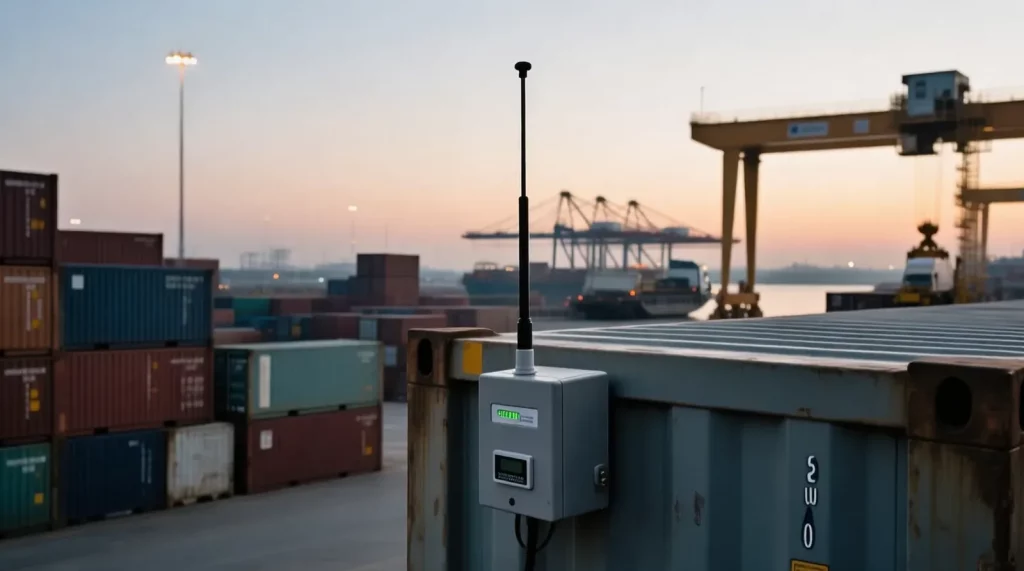
Trackers on trucks, containers and rental equipment move across borders and cannot know in advance where they will stop. A global IoT SIM with multi-network access fits them best; the container tracking procurement guide shows how to test a lane before signing a fleet contract, and the cold-chain truck example covers trailers that stay abroad for months. Plan sizes and APN setup for trackers are on the GPS tracker SIM page.
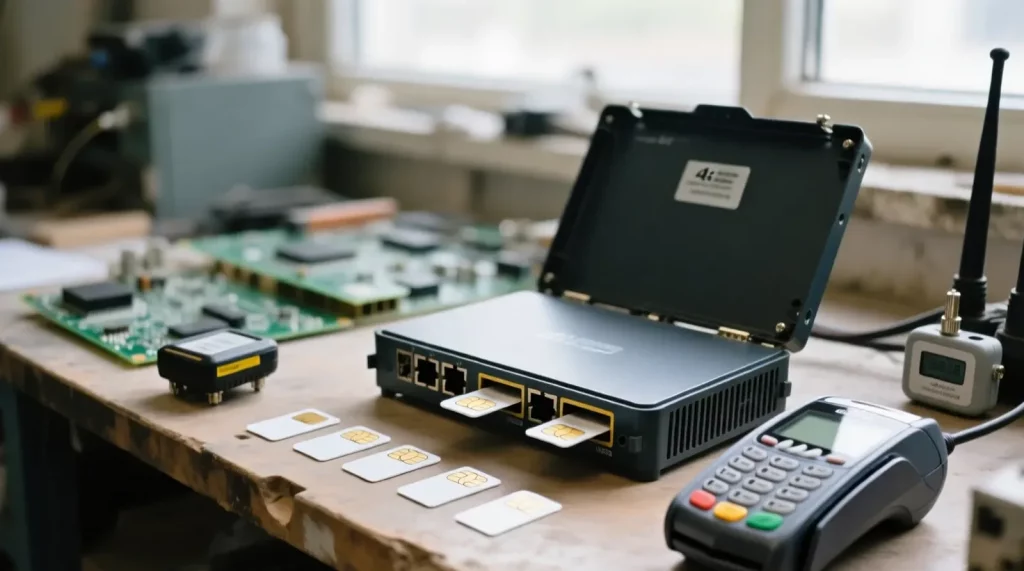
Fixed devices exported to many countries, such as payment terminals, vending machines and gateways, can start on a global SIM, which keeps one SKU on the production line. If a destination restricts permanent roaming, a local profile or SIM takes over there. Devices sold into one country only can usually go straight to a local SIM, unless a second network is needed for resilience.
Check radio technology on every route as well. A roaming SIM loses 2G or 3G service at the same moment as local users when the visited operator switches those networks off; the 2G and 3G shutdown checklist for GPS trackers lists the checks.
Cost, billing and operations
Unit price per megabyte is only part of the cost. Local SIMs can be cheap per megabyte but need a contract, stock and activation process for each country, and a different portal per operator. A global SIM concentrates that work into one platform, at a price that varies by country zone. Pooled data across the fleet smooths out devices that use more in one month than another. Estimate the monthly data per device with the IoT data usage calculator before comparing zone prices, and see the global IoT SIM pricing guide for when catalog prices apply and when a project quote does.
Whichever option you choose, insist on the operating tools: usage alerts, suspend and resume through an API, session logs that show which network a device attached to, and clear SIM lifecycle states so test and inventory SIMs are not billed as active. The guide to managing deployments in a CMP describes these functions, and the IoT SIM and eSIM glossary defines the terms used here.
When to ask for a project quote
- Devices will stay for more than a few months in countries where permanent roaming may be restricted.
- You need a private APN, fixed addressing or a VPN to reach devices from your servers.
- Your fleet needs local breakout or data residency in a specific country.
- You plan to switch from a global profile to local profiles over the air.
Quanqiu IoT supplies Global IoT SIM and eSIM connectivity with a CMP for fleet management; the operators and network technologies for each country are confirmed in the quote. Permanent-roaming questions for specific countries can be raised through the quote process.
FAQ
Is a global IoT SIM the same as a roaming SIM?
Technically it roams in most countries, but it is built for machines: several partner networks per country, one contract, a management platform and terms for devices that stay abroad.
What is permanent roaming and why does it matter?
It is the use of a visited network for months or years. Some operators and regulators restrict it, so check each country before shipping devices that will stay there.
What is a multi-IMSI SIM?
A SIM that holds several subscriber identities from different operators and switches between them, so the device attaches as a local subscriber in countries where one of those operators is local and roams elsewhere.
When is a local SIM the better choice?
When devices stay in one country for their whole life, when long-term roaming is not accepted there, or when data must break out locally.
Can an eSIM remove the need to choose?
It reduces it. An eUICC can start on a global profile and download a local profile later, but each local profile still needs an operator agreement.
Does roaming add latency?
Home-routed sessions add some delay because traffic returns to the issuer’s core first. For periodic telemetry this rarely matters; for video or remote control, test it on the real route.