Global IoT SIM: How It Works and How to Choose One
By jietion, Business Development (BD) at Quanqiu IoT · Published
Definition: A global IoT SIM is a SIM card or eUICC issued for machines that attaches to partner mobile networks in many countries so one SIM part number can ship in devices sold or moved across borders.
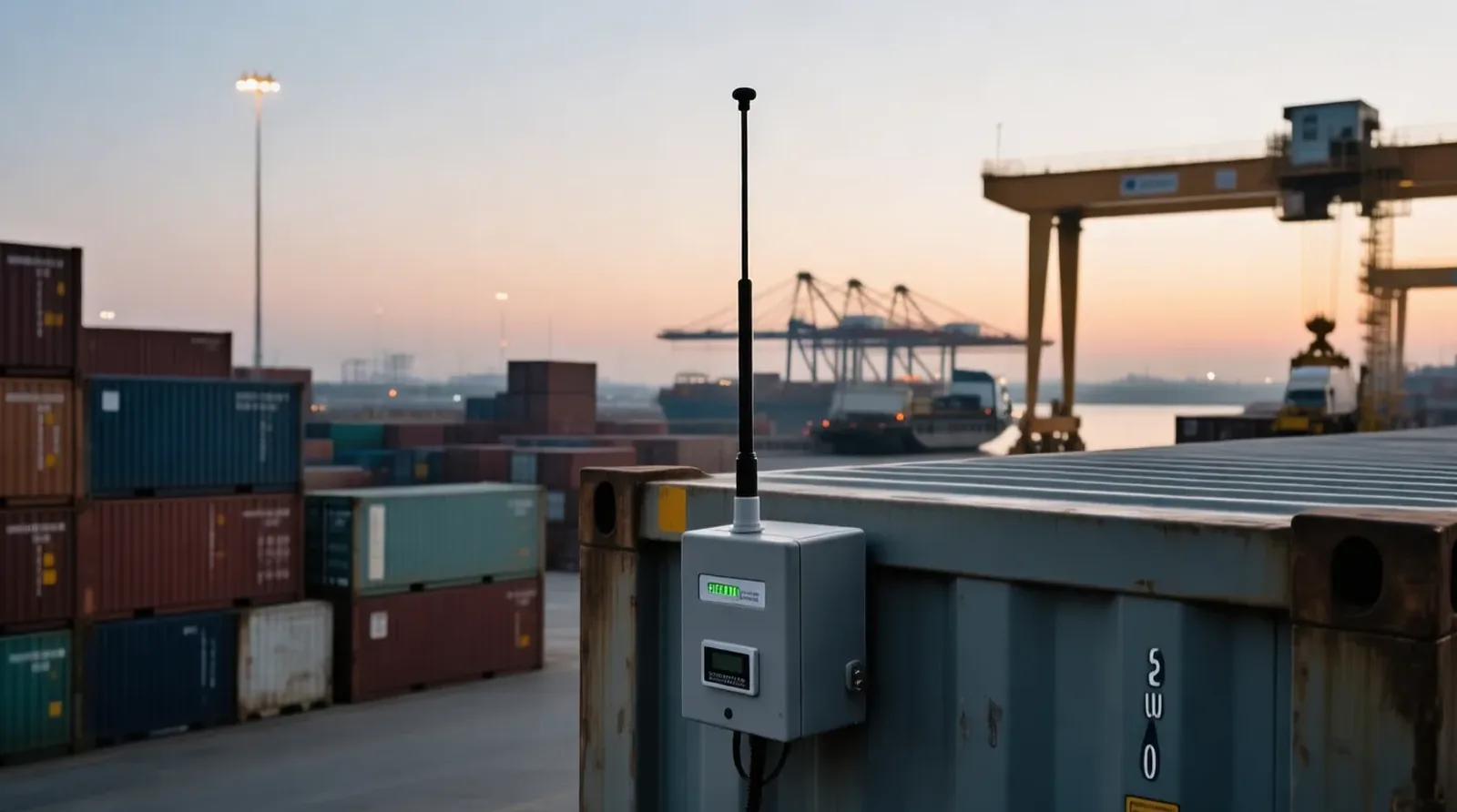
If your devices ship to more than one country, or travel between countries, a global IoT SIM lets you stock one SIM and one contract instead of a local SIM for every market. It works when three things line up in each country: a partner network that carries the radio technology your module uses, a roaming or local-profile arrangement that is allowed for a device that stays there for years, and a plan priced for your real traffic. Most field problems with global SIMs trace back to one of those three, so the useful questions are about the networks and rules in each country.
How one SIM reaches networks in many countries
Every SIM carries an IMSI, and the first digits of that number say which network issued it. ITU-T Recommendation E.212 sets this plan: a three-digit mobile country code (MCC), a mobile network code (MNC), then the subscriber number. When a device switches on abroad, the visited network reads the MCC and MNC, sees that the SIM belongs to a foreign operator and lets it attach under a roaming agreement. A global IoT SIM is, at its simplest, a SIM from a home operator with roaming agreements in many countries.
E.212 also provides shared country codes that do not belong to any one country, used by international networks, and an annex on using an MCC and MNC outside the country it was assigned to. Many global IoT SIMs are built on those resources, which is why the SIM in a tracker in Brazil may carry the same home network code as one in Poland.
Two newer mechanisms sit on top of plain roaming. A multi-IMSI SIM stores several IMSIs from different home operators and switches between them, so the device can present the identity that has the best agreement in each country. An eUICC goes further: it can download whole operator profiles over the air. GSMA has defined separate remote provisioning models for machines (SM-DP and SM-SR, used to download, activate and delete profiles) and for consumer devices, which add a local profile assistant on the device (Jia et al., 2019). The newer IoT model, SGP.31 and SGP.32, is written for devices with no screen and no user.
Profile switching can be automated. One proposed design adds a control program to the device that reads signal strength with the AT+CSQ command, compares it with a threshold stored for that device type and swaps to another operator’s profile when the reading stays below it (Min, 2022). The same study points out a practical reason for remote management: a plug-in SIM cannot change operator without a site visit, and it is the part most easily damaged by heat, cold and vibration.
Global IoT SIM, travel SIM, roaming SIM or local SIM
Buyers often compare a global IoT SIM with products that look similar on a price list. The differences show up after a year in the field, when a device has to stay online without anyone touching it.
| Option | Networks per country | Built for long stays | Remote management | Typical fit |
|---|---|---|---|---|
| Global IoT SIM (multi-network) | One or more partner networks, listed per country | Depends on each country’s roaming rules; confirmed per project | Usually a connectivity management platform (CMP) with suspend, resume and usage per SIM | Fleets that cross borders or ship to many markets from one factory |
| Consumer travel SIM or eSIM | Often one network, chosen for phones | No, sold for trips of days or weeks | App or web account per user | Laptops and phones on short trips |
| Single-operator roaming SIM | Whatever its home operator has agreed | Often limited by the visited operator | Operator portal | Pilots and small batches in a few countries |
| Local SIM in each country | One domestic network | Yes | One portal and contract per country | Large, fixed installations in one market |
| eUICC with local profiles | A domestic network per country, after a profile download | Yes, once a local profile is in place | Profile management plus a CMP | Products sold worldwide that must later localise |
The comparison of cost and contract terms is worked through in global vs roaming vs local IoT SIM for cross-border rollouts, and the choice between a plug-in card and a soldered eSIM in eSIM vs physical SIM for IoT.
Where a global SIM earns its place
The strongest case is a product made in one place and used in many. A tracker maker that sells into thirty countries can put the same SIM in every unit at the factory, test it before shipment and let it attach wherever the customer installs it. Without that, the factory needs a SIM stock per destination, and every reseller order turns into a logistics question.
The second case is equipment that moves: containers, trucks on cross-border routes, rental machines, boats. A local SIM fails at the border by design. A global SIM keeps one identity and one bill while the asset changes networks.
The third is regulation that expects remote provisioning. Russia’s ERA-GLONASS emergency call system, for example, made remote SIM provisioning a requirement for certification of eCall modules from 2020 (电子测量与仪器学报, 2020). For vehicle and telematics makers that ship into such markets, an eUICC that can take a local profile later belongs in the product design from the start.
A global SIM is a weaker fit for a few hundred fixed meters in one city. A local contract there is often cheaper, and the operator support is closer.
2G and 3G switch-offs change what coverage means
A coverage map that lists a country tells you a partner network exists there. It does not tell you which radio generations are still running. Legacy networks are being closed one market at a time, and a module that falls back to 2G or 3G when LTE is weak can lose service completely after a switch-off.
- Hong Kong has no 2G network left: China Mobile Hong Kong, the last operator running one, ended 2G service on 23 June 2026, and SmarTone has approval to end 3G on 9 October 2026 (OFCA).
- In Singapore, M1 began retiring 3G on 1 August 2024 and Singtel and StarHub planned to follow from November 2024. IMDA told car makers and fleet-management providers that rely on 3G to take mitigation steps.
- The Philippine regulator has ordered a nationwide 3G switch-off by 31 December 2026, in phases from large cities to the provinces, and stopped accepting type approval for devices whose only or main radio is 2G or 3G (NTC Memorandum Circular 003-09-2025).
- Denmark went the other way on 2G: TDC NET and Telia switched off 3G in 2023 but kept 2G running.
- In Slovakia, O2 is closing 3G region by region from January 2024. Devices without 4G then drop to 2G, where O2 limits data to about 250 kbit/s, enough for a heartbeat and too slow for a camera upload.
So the check is per country and per radio. Ask for the partner networks with their 4G, 5G and LTE-M status, compare them with the bands your module supports, and plan for the year the device will still be in the field. Trackers that still depend on 2G are covered in IoT SIM for GPS trackers after the 2G/3G shutdown.
LTE-M, NB-IoT and long stays abroad
GSMA describes LTE-M and NB-IoT as low-power wide-area technologies in licensed spectrum, designed for devices with low data rates and batteries that must last years. They are the natural replacement for 2G in meters, sensors and asset tags. Roaming on them is a separate question from roaming on LTE. An operator can run NB-IoT at home and still have no NB-IoT roaming agreement with the SIM’s home network, so a battery device designed around NB-IoT can find nothing to attach to abroad. Ask for LTE-M and NB-IoT roaming per country in writing, and keep LTE Cat 1 or Cat 4 in the design where you cannot get it.
Time is the other limit. Roaming agreements were written for travellers, and some regulators and visited operators restrict SIMs that stay on a foreign identity for months or years. The symptoms are a device that works for a while and then loses data, or works in one country of a region and not the next. Some markets add device registration, where a handset or module that is not registered is blocked whatever SIM it holds. These rules change, so treat any list you are given as a snapshot and ask how the supplier handles a country that tightens its rules after you have deployed: a different partner network, a local profile on an eUICC, or a local SIM.
How global IoT SIM pricing is usually built
Prices are set per country or per zone, because the wholesale cost of data differs widely between networks. A plan that covers one country is usually cheaper than a regional plan that covers a set of countries, and a worldwide plan costs the most, since it has to price the expensive networks in.
Most offers combine some of these parts: a data allowance per SIM per month or per year, a monthly fee per active SIM, a one-time card or eSIM fee, and rules for what happens when the allowance runs out. With some plans the data stops; with others extra usage is billed or a top-up is added. Pooling lets a fleet share one allowance, which matters when a few devices use far more than average. Long-stay SIMs in stock may also carry a fee while suspended. The global IoT SIM pricing guide explains how to compare these terms across suppliers.
For budgeting, start from measured traffic. A GPS tracker reporting every minute and a CCTV camera uploading clips are several orders of magnitude apart, and the plan should be sized for the device first.
What to check before you order
A short pilot answers more than a long sales call. Before the pilot, ask for these in writing:
- the partner networks in each target country, with 4G, 5G, LTE-M and NB-IoT status for each;
- any network in your list that is closing 2G or 3G, and when;
- how long a device may stay in each country on the SIM, and what happens if a rule changes;
- the APN and attach settings, and whether they are the same in every country;
- the SIM form factor and grade for your temperature and vibration range, or an eSIM option;
- what the management platform shows per SIM (usage, last network, status) and whether you can suspend and resume yourself;
- the full price build: data, monthly fee, card fee, overage or cut-off, suspension.
Then test in the real installation sites, with the production module and antenna, for long enough to see a few network changes.
Quanqiu IoT supplies Global IoT SIM cards as physical SIMs and eSIM, on single-country or multi-country plans, with pooled data above a minimum quantity. The partner networks for each country are confirmed in the project quote for your device and locations; send the module, country list and expected traffic through the quote process.
FAQ
Is a global IoT SIM the same as an international roaming SIM?
It uses roaming, but it is built for machines. A global IoT SIM usually has several partner networks per country, a management platform for thousands of SIMs and plans sized for device traffic. A consumer roaming SIM is built for a phone on a short trip and often limits long stays.
Does a global IoT SIM work in every country?
No supplier covers every country, and coverage varies by radio technology. Ask for the list of partner networks per country with their 4G, LTE-M and NB-IoT status, and check it against the bands of your module before you commit.
Can a device stay abroad on a global SIM permanently?
Sometimes. Some regulators and visited operators limit how long a foreign SIM can stay on their network. Check the rule for each country where devices will stay for months, and ask what the fallback is: another partner network, a local eUICC profile or a local SIM.
Should I choose a physical SIM or an eSIM?
A plug-in SIM is simple for pilots and for devices that already have a SIM tray. A soldered eSIM resists vibration and temperature better and, with an eUICC, can take a new operator profile over the air when a market changes. The decision usually follows the device design and the expected life in the field.
Why is a multi-country plan more expensive than a single-country plan?
Wholesale data prices differ by network, and a plan that covers many countries has to include the expensive ones. If most devices stay in one country, a single-country plan with a few regional SIMs for the rest is often cheaper.
Official References
- ITU-T Recommendation E.212: The international identification plan for public networks and subscriptions
- GSMA: eSIM Consumer and IoT Specifications
- GSMA: Mobile IoT (LPWA)
- OFCA: Communications Authority grants consent to CMHK to cease its 2G services (16 December 2025)
- OFCA: consent to SmarTone to cease its 3G services (24 July 2026)
- IMDA: 3G services to retire in phases (24 July 2024)
- NTC Memorandum Circular No. 003-09-2025 on the phase-out of 2G and 3G services
- TDC NET: 3G phase-out and 2G for voice and basic data (25 August 2022)
- Telia Danmark: Farvel til 3G (18 April 2023)
- O2 Slovakia: 3G network switch-off
- Min Qingxue (2022). Automatic Switching Between Multiple Operators for IoT Device Communication Based on eSIM Technology (in Chinese). 通信管理与技术, (5), 45-49.
- (2020). Rohde & Schwarz and COMPRION Provide Combined Test Solution for Remote SIM Provisioning of Embedded SIM (eSIM) (in Chinese). 电子测量与仪器学报, 33, 202.
- Jia Yuyong, Yang Jian, Tang Jianhuan (2019). Discussion on the Evolution of eUICC Technology for Consumer Electronics (in Chinese). , (3), 42-47.
- (2020). Rohde & Schwarz and COMPRION Provide Combined Test Solution for Remote SIM Provisioning of Embedded SIM (eSIM) (in Chinese). 电子测量与仪器学报, 33, 202.