LTE-M GPS Trackers: Battery Life, PSM and eDRX Settings and Network Coverage
By jietion, Business Development (BD) at Quanqiu IoT · Published · Updated
Definition: In an LTE-M GPS tracker, the IoT SIM attaches the device to an operator’s LTE-M network, and the PSM and eDRX timers that network grants decide how long the tracker sleeps between reports.
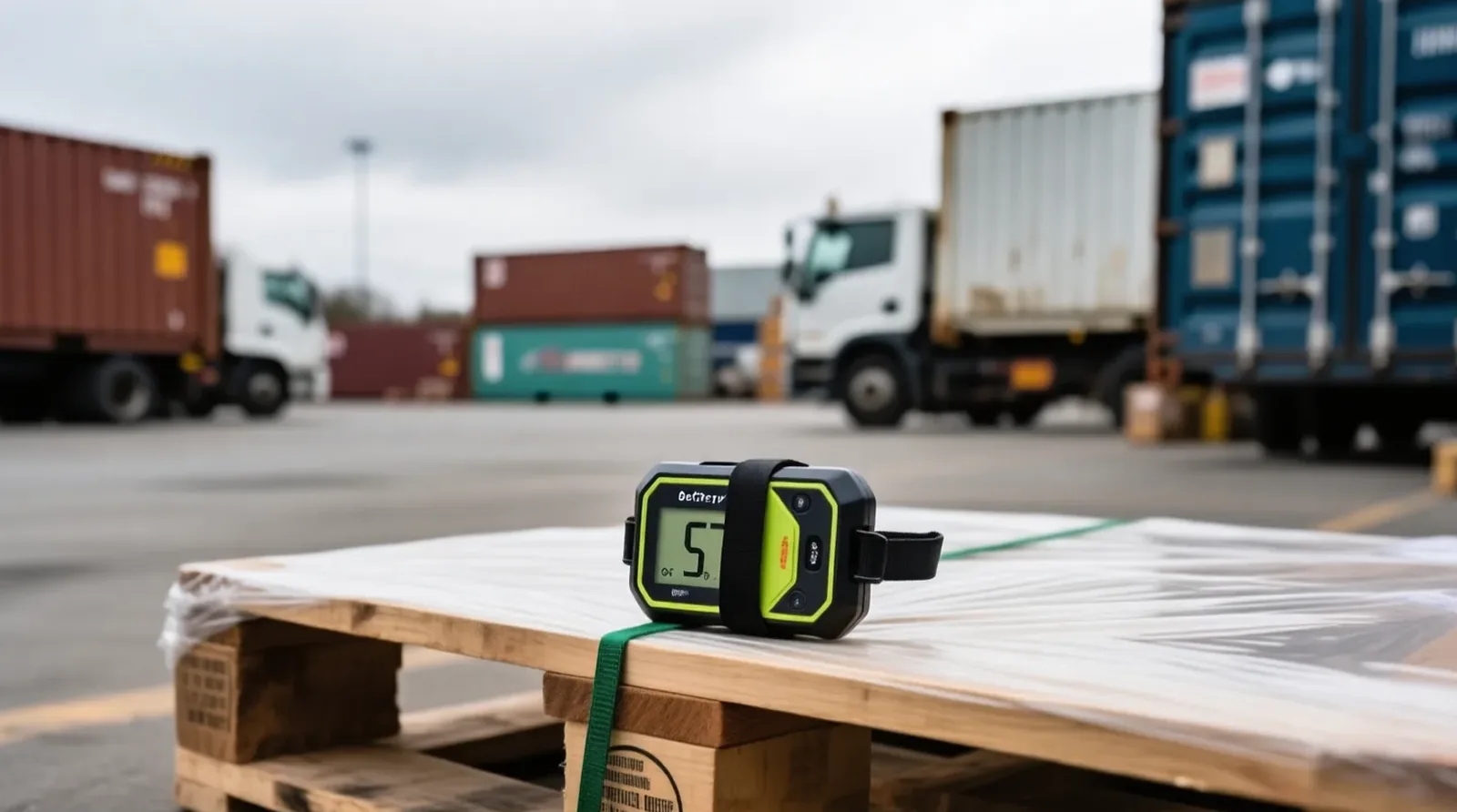
An LTE-M GPS tracker lasts months on a small battery only when its modem spends almost all of its time asleep, and that sleep is set by two network timers, PSM and eDRX, not by the reporting interval in the app. Reporting less often helps far less than most buyers expect if the radio stays attached and listening. Before choosing a device, check which timers your target operators actually grant, whether LTE-M exists in every country on the shipping list, and what the tracker falls back to where it does not.
Reporting less often barely helps a tracker that never sleeps
A 2015 design study of a vehicle tracker built on a SIM908 GSM/GPRS and GPS module shows the problem in plain numbers (Wu et al., 2015). With a 1,100 mAh single-cell battery and outdoor tests, the tracker drew an average of 289.0 mA when it sent a position every second and lasted 3.2 hours. Stretching the update interval to 60 seconds cut the average current only to 89.2 mA, for 10.5 hours of battery. Sixty times fewer reports bought about three times the runtime.
The floor of roughly 90 mA is the GPS receiver and a GPRS session that never closes. No interval setting removes it. That is the gap LTE-M power-saving features were designed to close, and it is why a 2G tracker and an LTE-M tracker with the same “report every 10 minutes” setting can differ by an order of magnitude in battery life.
The opposite design appears in a 2024 positioning terminal for airport baggage carts, which have no power of their own (Jiang & Shi, 2024). The terminal uses GPS/BeiDou with NB-IoT outdoors, sleeps whenever the cart is idle, and wakes on its 3-axis accelerometer or for a scheduled daily report. The authors give a standby time of more than one year. Movement, not a clock, decides when it talks.
What PSM and eDRX do once the network grants them
Power Saving Mode lets the modem stay registered while switching its receiver off. After each uplink it listens for a short active period (timer T3324), then goes silent until its next periodic tracking area update (extended T3412) or until the device itself has something to send. While in PSM, the network cannot reach it at all. That suits asset tags that only report.
Extended discontinuous reception (eDRX) keeps the modem reachable but stretches the gap between the moments it checks for paging. LTE-M allows eDRX cycles up to 2,621.44 seconds in the 3GPP specifications, while NB-IoT allows longer ones. A tracker that must answer a “where are you now?” command uses eDRX, and the cycle length becomes the worst-case delay before it hears the request.
The device only requests these values. The network decides what to grant, and the granted values can differ by operator and change when the tracker roams. A study of cellular IoT paging analysed 12 days of NB-IoT and LTE paging data from one operator’s base stations and found a paging response rate of only 2.11% (Wu & Wu, 2024). The same paper notes that third-party platforms cannot page devices directly: requests go through the operator’s IoT platform. Waking a sleeping tracker on demand is an operator feature you have to confirm, not a given.
How one operator turns timers into service profiles
The paging study lists the NB-IoT APN profiles one Chinese operator offers for power saving (Wu & Wu, 2024). The values are for NB-IoT on that network, and LTE-M timers elsewhere will differ, but the logic is the clearest public example we know of how an operator ties timers to latency promises. The table below picks four of those profiles.
| Profile | PSM active timer (T3324) | eDRX cycle | Paging window | Downlink latency it targets | Example uses given |
|---|---|---|---|---|---|
| PSM only | 8 s | Not enabled | Not enabled | No platform-triggered downlink | Environmental monitoring, manhole covers |
| eDRX, short | Not enabled | 20.48 s | 10.24 s | 21 s to 1 min | Shared bikes, personnel trackers |
| eDRX, medium | Not enabled | 81.92 s | 10.24 s | 1 to 2 min | Hazardous goods and cold chain monitoring, construction machinery |
| PSM plus eDRX | 120 s | 20.48 s | 10.24 s | Low real-time need | Smart parking |
Source: Wu & Wu (2024), NB-IoT APN profiles of one operator; LTE-M values on your target networks are to be confirmed during project validation.
Personnel trackers sit in the 20.48-second profile. A “find my bike” button that answers within half a minute needs that kind of setting, and it costs battery compared with pure PSM.
Choosing timers by tracker type
Most tracker projects fall into a few patterns. The right setting follows from two questions: does the device have external power, and does anyone need to reach it on demand?
| Tracker type | Typical reporting | Needs on-demand downlink? | Mode to request | What to verify |
|---|---|---|---|---|
| Pallet, container or trailer tag on battery | A few reports a day, more when moving | No | PSM with a short active timer, motion wake | Granted T3412 value and current in PSM: to be confirmed during project validation |
| Personal, pet or bike tracker | Periodic plus a “locate now” command | Yes | eDRX, cycle sized to the acceptable wait | Paging through the operator platform works when roaming |
| Vehicle tracker on vehicle power | Every 10 to 60 s while driving | Yes | Normal DRX while ignition is on, PSM when parked | Standby drain on the vehicle battery when parked |
| Motorcycle anti-theft tracker | Event-driven alarms | Sometimes | PSM plus accelerometer wake, eDRX if remote immobilise is used | Alarm reaches the server within the required time after a long sleep |
For interval sizing and keep-alive traffic, our guide to GPS tracker reporting intervals and keep-alive timers covers the server side, and the article on power budgets for battery-powered sensors compares LTE-M with NB-IoT and LoRa.
Coverage and roaming decide whether LTE-M is the right radio
LTE-M is a 3GPP technology that runs in licensed spectrum on operator networks, which the GSMA groups under Mobile IoT. Not every country has it, and not every operator that has it signs LTE-M roaming agreements. A tracker that ships to ten countries may find LTE-M in six of them. Where it is missing, the device needs Cat-1 or 2G, and 2G is closing in many markets, a problem covered in our note on trackers after the 2G and 3G shutdown.
Roaming also changes power behaviour. PSM and eDRX timers are granted by the visited network, so a tracker tested at home on long eDRX cycles may get short ones, or none, abroad. Indoor depth matters too. A 2026 review of low-power networks notes that NB-IoT targets a maximum coupling loss of 164 dB, yet underground ducts and dense reinforced concrete eat that margin quickly (Han, 2026). LTE-M has less coverage enhancement than NB-IoT, so a tracker meant for basements and steel containers should be tested where it will live.
Field checks before a volume order
Run these on the actual networks and countries, with the production firmware:
- Read back the granted PSM and eDRX values after attach (the modem reports what the network accepted, which may differ from the request).
- Measure average current over a full day at the intended interval, including GNSS fixes. The GNSS receiver often uses more energy than the modem on a tracker that sleeps well.
- Check the server design. A TCP session will not survive hours of PSM, so the tracker must reconnect cleanly or use a protocol built for sleepy devices.
- Test a remote command after the longest sleep you allow and time the answer.
- Repeat the attach and timer readback on every roaming network in the plan.
Global IoT SIM supports the network technologies offered in each country, including LTE-M where the local network has it, and the coverage per country is confirmed in the project quote. Our standard GPS tracker plan is 30 MB per month, with pooled data above a minimum quantity, and the APN to use is printed on the SIM delivery sheet.
A closer look at field results in IoT devices is in 5G RedCap vs 4G LTE for IoT Devices: Cost, Power, Field Results and SIM Checks.
FAQ
Does setting a longer reporting interval double battery life?
Rarely. In the 2G tracker study above, going from 1-second to 60-second updates raised runtime from 3.2 to 10.5 hours because the radio and GPS stayed on. Large gains come when the modem sleeps between reports through PSM or eDRX.
Can I send a command to an LTE-M tracker that is in PSM?
No. In PSM the device cannot be paged until it wakes for its next update or its own uplink. If you need on-demand commands, use eDRX and accept a delay up to the eDRX cycle.
Will my PSM and eDRX settings work when the tracker roams?
Not necessarily. The visited network grants its own values. Test attach and timer readback on each roaming network before you rely on a battery-life figure.
Should I choose LTE-M or NB-IoT for a tracker?
LTE-M supports mobility between cells and higher data rates, which suits moving assets. NB-IoT reaches deeper indoors and allows longer sleep cycles but handles movement less well. Country availability often decides it.
What happens where LTE-M is not available?
A multi-mode tracker falls back to Cat-1 or 2G if the module and SIM support them. Battery life drops on fallback, so size the battery for the worst network on the route.
Official References
- GSMA: Mobile IoT (licensed low power wide area)
- Wu Zhenyu, Song Xi (2015). Design of a Probe Vehicle Tracker Based on SIM908 and KL25 (in Chinese). 计算机测量与控制, 23(9), 3151-3154.
- Jiang Jian, Shi Qiyu (2024). An Intelligent Positioning Terminal for Unpowered Equipment and Its Method (in Chinese). 中国信息界, (04), 183-185.
- Wu Hang, Wu Chengying (2024). Research on Air-Interface Paging Access Technology for Cellular IoT (in Chinese). 通信与信息技术, (04), 28-32.
- Han Baohua (2026). Optimization of Low-Power Wide-Area Network Communication Technology for the Internet of Things (in Chinese). 中国宽带, 22(10), 49-51.