Battery-Powered IoT Sensors: Power Budgets, LPWAN Choice and SIM Settings for Underground and Remote Sites
By jietion, Business Development (BD) at Quanqiu IoT · Published
Definition: For a battery-powered sensor, the IoT SIM decides which network the device may join, which power-saving timers the network grants, and therefore how many years a fixed battery can carry the reporting schedule.
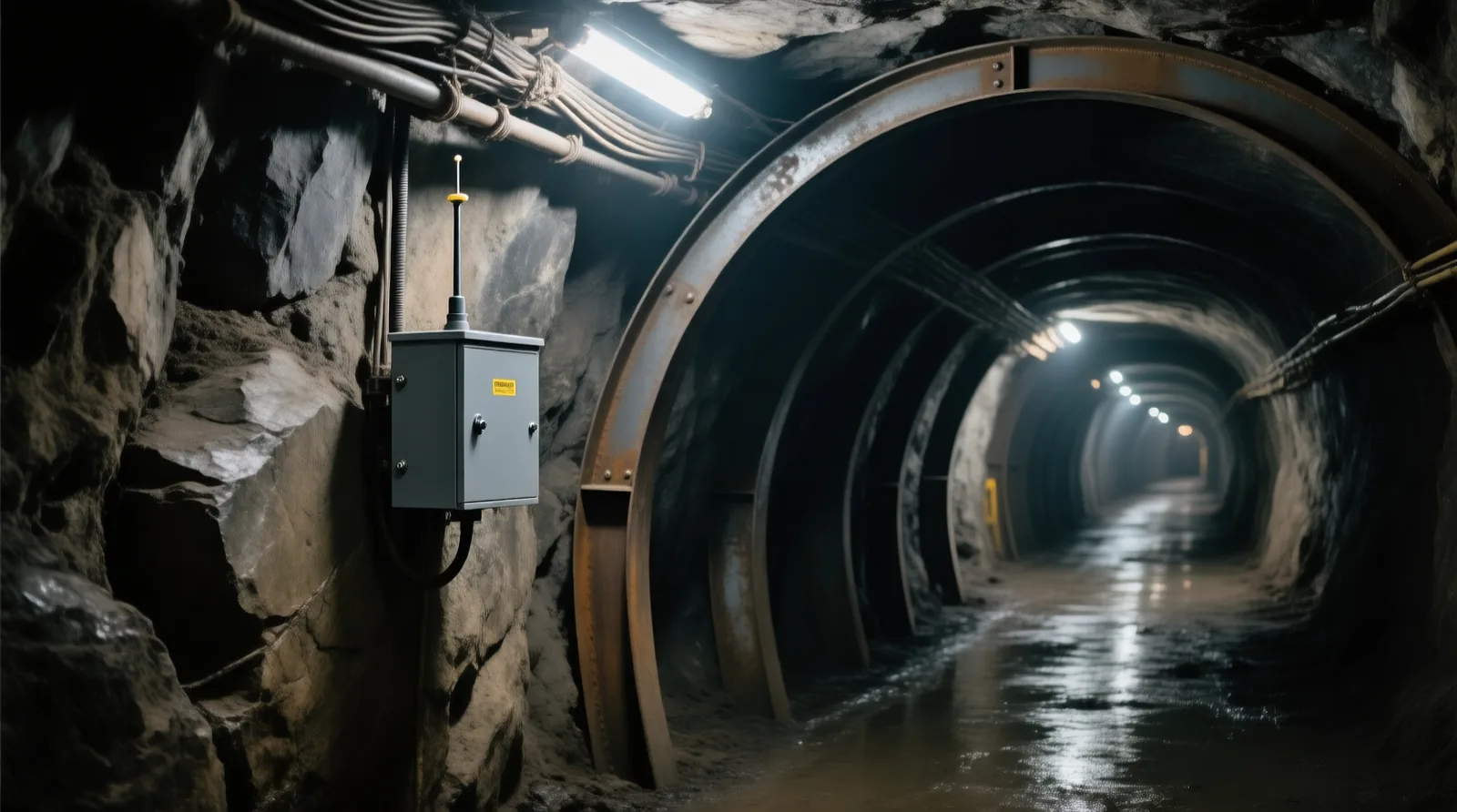
The short answer: size the battery from measured sleep current, wake frequency and the radio bursts that follow each report, then choose NB-IoT, LTE-M or LoRaWAN from where the sensor sits and how fast it must react. A sensor in a mine roadway, a cable tunnel or a remote pump station rarely fails because the battery chemistry was wrong. It fails because the device stayed awake longer than the spreadsheet assumed: retrying in weak signal, scanning bands it never needed, or listening for paging more often than the application required. The connectivity choice and the SIM’s network settings belong in the power budget from the first prototype.
Start the budget at the sleep floor, not the datasheet headline
A useful reference point comes from a battery management design for underground coal-mine IoT equipment. The system pairs a hardware battery-monitoring coprocessor with an ESP32 controller, watches 3 to 16 series cells, and sleeps at a static current as low as 43 µA; in periodic wake-up mode, waking every 10 s, the average rises to 300 µA, with the controller drawing about 60 mA while active (Wang et al., 2026). The authors estimate five years of monitoring from a 3000 mAh pack under ideal conditions.
Run the simple arithmetic yourself before accepting any endurance claim. At the 43 µA floor, 3000 mAh lasts roughly 69,800 hours, close to eight years, before the device does anything useful. At a 300 µA average the same pack lasts about 10,000 hours, a little over one year. The difference between those two numbers is the whole design problem: how often the device wakes, and how long each wake lasts. The paper’s own limitation matters here too. Its tests used three cells in a laboratory, and self-discharge, leakage, heat and humidity underground were estimated rather than measured (Wang et al., 2026). Treat any multi-year figure as a target to verify on your hardware, not a property of the battery.
Note also what this design does not include. The battery management electronics alone consume those currents; a cellular or LoRa radio adds its own sleep current and transmit bursts on top. Budget the radio as a separate line, measured on the module you will ship.
Where the radio spends your battery
For each reporting cycle, three states dominate: deep sleep, the attach or wake-up exchange with the network, and the transmit-receive window. Average current is the sum of each state’s current multiplied by its duration, divided by the cycle length. Engineers usually get sleep and transmit right and underestimate the middle state, because it depends on the network rather than the device.
Cellular LPWA modules can cut standby drain sharply with Power Saving Mode (PSM) and extended discontinuous reception (eDRX). A railway IoT architecture study describes these features lowering NB-IoT standby current from the milliampere range to the microampere range, and notes that older GPRS modules lack both, so designers fall back to deep sleep with an external or timed wake-up (Qu, 2020). eDRX stretches idle-mode paging intervals from seconds to hours, while connected-mode DRX cycles of 5.12 s and 10.24 s apply when a session is open (Wang et al., 2022).
The SIM matters because these timers are requested by the device and granted by the network. A module can ask for a long PSM period, and the serving network may return a different value or none at all. If the granted timer is shorter than planned, the sensor wakes for tracking-area updates you never budgeted. Read back the granted values during field trials in each target country, on the subscription you will actually deploy.
Attach time is the other hidden cost. The railway study recommends limiting frequency scanning to the band actually in use and disabling unused circuit-switched functions so terminals attach faster (Qu, 2020). The same discipline applies to any battery sensor: lock the module to the bands and radio access technology the deployment needs, and do not let it search every band after each wake.
NB-IoT, LTE-M or LoRaWAN for mines, tunnels and remote sites
All three are built for small, infrequent payloads. Low-power wide-area networks suit large numbers of sensing terminals with periodic reports, event triggers and short packets (Han, 2026). The GSMA describes Mobile IoT as 3GPP-standardised LPWA running in licensed spectrum and managed by operators, aimed at long battery life in hard-to-reach locations. The LoRa Alliance positions LoRaWAN as an open LPWA specification in unlicensed bands that can run on private, public, community or satellite networks.
NB-IoT is the deep-coverage option on public networks. Its design target is a maximum coupling loss of 164 dB, yet that margin is consumed quickly in underground ducts and dense reinforced concrete (Han, 2026). Part of its reach comes from higher power spectral density than LTE: 43 dBm per 180 kHz in standalone downlink, 17 dB above LTE, plus up to 2048 downlink and 128 uplink repetitions (Wang et al., 2022). Repetitions buy coverage with airtime, and airtime is battery. A sensor at the edge of coverage can stay compliant on paper while draining far faster than one near the cell.
LTE-M carries more data, supports mobility between cells and keeps PSM and eDRX, which makes it the usual pick for assets that move or need firmware updates of meaningful size. It does not reach as deep as NB-IoT in basements and shafts.
LoRaWAN shifts the coverage problem to you: you install gateways where the sensors are, then backhaul the gateway. Data rates run from roughly 0.3 to 50 kbps, with slower rates extending range at the cost of airtime; Class A devices open their two receive windows about 1 s and 2 s after an uplink, which fits periodic collection but not fast control; and in the EU 863-870 MHz plan devices default to at most 16 uplink channels with transmit duty cycles typically below 1% (Han, 2026). For a long tunnel or a mine level, a private LoRaWAN network with a cellular gateway at the portal is often easier to cover than pushing every sensor onto a public cell. Our guide to IoT SIM for LoRaWAN gateways and private sensor backhaul covers that gateway link.
Decision table for underground and remote sensor programmes
| Site condition | Likely radio choice | Main power risk | What to confirm |
|---|---|---|---|
| Fixed sensor, public coverage at the surface, weak indoors | NB-IoT | Repetitions at the coverage edge lengthen every transmission | Measured signal at the mounting point; NB-IoT availability per country, to be confirmed during project validation |
| Moving asset or larger firmware images | LTE-M | Handover and session overhead while moving | Granted PSM and eDRX timers on the deployed subscription |
| Deep shaft, long tunnel, no public signal below ground | Private LoRaWAN with a cellular gateway | Gateway placement, mains or battery supply at the gateway | Gateway backhaul plan and data volume per gateway |
| Legacy 2G-only module still in service | GPRS with timed wake-up | No PSM or eDRX, full attach on each wake | Network sunset dates in each country, to be confirmed during project validation |
| Alarm sensor that must report within seconds | LTE-M or NB-IoT with event wake-up | Long sleep timers delay downlink commands | Acceptable delay for commands sent to the sensor |
Cut wake-ups before you buy a bigger battery
The cheapest milliampere-hour is the one the device never spends. Han (2026) suggests splitting traffic into periodic collection, anomaly alarms, remote control and batch retransmission, each with its own packet size, period and retry rule. For slow-changing values such as temperature, liquid level or pressure, the terminal can check thresholds locally and transmit only when a reading leaves its set range. Separate power domains for the microcontroller, radio and sensors, together with packet compression and merged reports, cut consumption further (Han, 2026).
In practice that means a gas or water-level sensor might sample every minute but transmit every few hours, and break that schedule only for an alarm. The mine BMS design follows the same pattern with an event-driven state machine that moves between deep sleep, periodic wake-up, fault emergency and safe shutdown (Wang et al., 2026). Retries need the same discipline. Every retry repeats the most expensive part of the cycle, the attach and transmit window, so cap the retry count and back off between attempts instead of trying again at once.
Coverage work pays back in battery life as well. Han (2026) recommends grouping sites by terminal density, obstruction, underground depth, metal density and reporting period, filling blind spots with directional antennas, feeder extension or small supplementary nodes, and tracking RSSI, SNR, join success, retransmissions and packet loss to keep a live coverage map. A sensor moved two metres toward a better signal may need fewer repetitions on every report for its whole life.
SIM and subscription settings that change battery life
A Global IoT SIM for battery sensors should be specified like a component, not bought like a data bundle. Before volume orders, write down the radio access technologies the subscription allows in each country, whether PSM and eDRX are honoured on the visited networks, the APN and IP settings the firmware will use, and the industrial temperature range of the SIM form factor. Soldered MFF2 or embedded eSIM parts avoid contact wear in vibration and humidity, which matters in mines and pump stations.
eSIM helps when the device may later need a different network profile and nobody wants to open sealed housings. Power-network terminals have used remote provisioning for exactly this reason; see our article on eSIM for power distribution automation terminals. A CMP adds the operational view: last-seen time, data used per SIM and session counts. A sensor whose session count suddenly multiplies is usually retrying, and that is a battery problem you can catch before the field team does.
When a battery sensor project needs a project quote
A single-country pilot of a few dozen sensors on a public network can usually start from catalog plans. Move to a project quote when the programme spans several countries, depends on NB-IoT or LTE-M availability and PSM support per network, needs eSIM profiles or CMP access, or combines cellular sensors with LoRaWAN gateways. Include the reporting interval, payload size, expected alarm rate, mounting conditions, module model and target battery life in the request. Coverage underground, granted network timers and roaming availability are confirmed during project validation; we do not promise them in advance.
FAQ
Can an NB-IoT sensor really last ten years on one battery?
Only under favourable conditions. Han (2026) ties the ten-year figure to low traffic and controllable coverage, and Wang et al. (2022) say it depends on the application. Weak signal, frequent reports and retries shorten it quickly, so validate on your hardware and site.
Should a mine or tunnel use NB-IoT or private LoRaWAN?
If there is usable public signal at each sensor, NB-IoT avoids building infrastructure. If sensors sit deep below ground with no signal, a private LoRaWAN network with a cellular gateway at the surface is usually the practical route.
Why does my sensor drain faster than the bench test predicted?
Common causes are weaker field signal, network-granted PSM or eDRX timers that differ from the requested values, band scanning after each wake, and unlimited retries. Compare session counts and data usage per SIM against the plan.
Does the SIM itself affect power consumption?
Indirectly but strongly. The subscription determines which networks and radio technologies the device can use and whether power-saving timers are granted on those networks, and those settings drive how long the radio stays awake.
Is eSIM worth it for a sealed battery sensor?
It is worth considering when sensors stay in the field for many years and may need a different operator profile later. The eUICC part, module support and profile management must be specified together before production.
Official References
- LoRa Alliance: About LoRaWAN
- GSMA: Mobile IoT (LPWA) in licensed spectrum
- Wang Huiming, Liu Junxiang, Liu Zuiliang, Wang Wenda, Hu Jie (2026). Design of a Low-Power Lithium Battery Management System for Internet of Things Applications in Coal Mines (in Chinese). 电子设计工程, 34(20), 56-61.
- Han Baohua (2026). Optimization of Low-Power Wide-Area Network Communication Technology for the Internet of Things (in Chinese). 中国宽带, 22(10), 49-51.
- Wang Yanfeng, Shen Yongpeng, Tang Yaohua, Zhong Jianying, Zhang Youpeng (2022). Framework and Key Technologies for NB-IoT Energy Internet of Things to Achieve Carbon Peak and Neutrality Goals (in Chinese). 电力系统保护与控制, 50(8), 179-185.
- Qu Yi (2020). Architecture and Key Technologies of the Carrier Layer of the Railway Internet of Things (in Chinese). 铁道通信信号, 56(7), 49-52.