5G RedCap vs 4G LTE for IoT Devices: Cost, Power, Field Results and SIM Checks
By jietion, Business Development (BD) at Quanqiu IoT · Published · Updated
Definition: In a 5G RedCap device, the IoT SIM must carry a subscription that allows 5G standalone access on every target network, because a Release 17 RedCap modem cannot use LTE-anchored 5G.
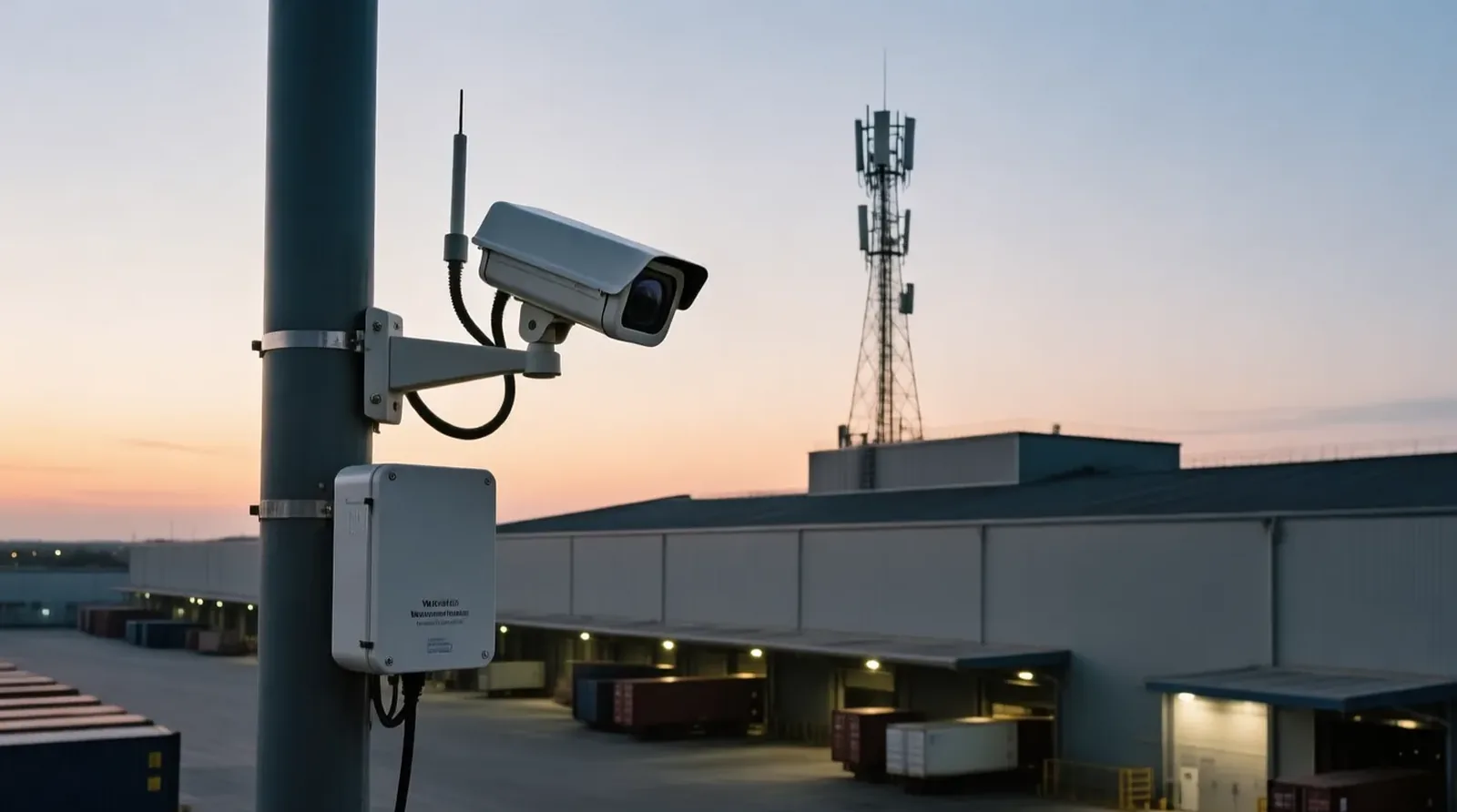
Choose 5G RedCap over 4G LTE when a device needs LTE Cat 4 class throughput, will stay in the field for ten years or more, and ships to countries where your operators already run 5G standalone with RedCap enabled. Stay on LTE Cat 1, Cat 1 bis or Cat 4 when any target network or roaming partner lacks 5G SA, when the device sends a few megabytes a month, or when the module price gap still decides the bill of materials. The radio comparison is the smaller part of the decision. The SIM subscription, SA roaming and per-cell admission rules decide whether a RedCap device connects at all.
What Release 17 removed from a 5G modem, and what each cut saves
3GPP completed Release 17 in 2022 with reduced capability NR devices as one of its main projects. The idea is a 5G device class sized close to LTE Cat 4, with the 5G core features kept and the expensive radio parts taken out. The standard was frozen in June 2022 (Chi et al., 2023), and the study item behind it opened in December 2019 at RAN plenary #86 (Xu, 2021).
The cost savings come from four cuts, each estimated with the 3GPP cost model (Xu, 2021):
- Maximum device bandwidth in FR1 drops from 100 MHz to 20 MHz, saving about 30% of device cost.
- Receive chains drop from 2 to 1 in FR1 FDD (about 37% saved), or from 4 to 2 or 1 in FR1 TDD (about 40% or 60%).
- Downlink modulation is capped at 64QAM, with 256QAM optional, for about 6%.
- Half-duplex FDD Type A replaces the duplexer with a switch, for about 7%. Rel-17 chose Type A for FDD RedCap.
Combined, 20 MHz with one receive antenna, a single layer, 64QAM downlink and 16QAM uplink comes to roughly 60% lower cost for FDD and 70% for TDD (Xu, 2021). Throughput pays for it. The same study estimates that cutting bandwidth to 20 MHz alone removes about 80% of the peak rate, and moving from 4 receive layers to 1 removes about 75%. These percentages are model estimates for the modem, not price quotes. Full 5G modules were selling at roughly 500 to 1,000 yuan when the work started (Li et al., 2022), which is the gap RedCap was designed to close.
RedCap, LTE Cat 4 and Cat 1 side by side
The fair comparison for Rel-17 RedCap is LTE Cat 4, not full 5G. Peak rates land in the same range, and RedCap adds the 5G core features: network slicing, the 5G security framework and longer sleep cycles. Rel-18 adds a lighter version, often called eRedCap, that cuts the FR1 traffic channel to 5 MHz and the FDD downlink peak to 10 Mbit/s, which puts it against LTE Cat 1 and Cat 1 bis (Chi et al., 2023).
| Item | LTE Cat 1 / Cat 1 bis | LTE Cat 4 | Rel-17 RedCap (1T2R) | Rel-18 eRedCap |
|---|---|---|---|---|
| Antennas | 1T1R | 1T2R | 1T2R, 1T1R allowed | To be confirmed during project validation |
| Peak rate, FDD | 10 Mbit/s down, 5 Mbit/s up | 150 Mbit/s down, 75 Mbit/s up | 170 Mbit/s down, 85 to 90 Mbit/s up | 10 Mbit/s down |
| Peak rate, TDD | 7.4 Mbit/s down, 1 Mbit/s up | 110 Mbit/s down, 15 Mbit/s up | 122 Mbit/s down, 17 Mbit/s up | To be confirmed during project validation |
| Core network | LTE (EPC) | LTE (EPC) | 5G standalone only | 5G standalone only |
| Slicing | No | No | Yes, where the operator offers it | Yes, where the operator offers it |
| Market status | Mature | Mature | First commercial use expected from 2023 | Rel-18 stage 3 frozen at the end of 2023 |
Sources: peak rates at 64QAM from Chi et al. (2023) and Li et al. (2022), which print 90 and 85 Mbit/s respectively for the RedCap FDD uplink; commercial timing from Li et al. (2022) and Rel-18 timing from Huang et al. (2024). Country availability of 5G SA and RedCap is not covered by any of these studies.
What the first field trial measured on live 5G cells
Model estimates say little about a real network, so the most useful data point is a trial on upgraded commercial sites. Huang et al. (2024) tested an early 1T2R RedCap terminal on 22 sites at 2.6 GHz with about 500 m spacing and 8 sites at 700 MHz with about 800 m spacing, after a software upgrade of the base stations. Peak PDCP throughput in drive tests was 126.76 Mbit/s down and 17.232 Mbit/s up at 2.6 GHz, and 202.088 Mbit/s down and 32.688 Mbit/s up at 700 MHz, about 70% of the theoretical peak with 256QAM. Ping tests averaged close to 20 ms with 100% success over 1,791 and 2,193 attempts. The cells broadcast RedCap access fields in SIB1, and the network could identify the terminals and control their admission.
Look at the uplink figure before you put a camera on RedCap. A 2.6 GHz TDD carrier gives most of its slots to the downlink, and the trial device peaked at about 17 Mbit/s up in good urban conditions. High-end video surveillance needs 7.5 to 25 Mbit/s of uplink per camera (Li et al., 2022), so a 4K stream on a TDD band has little headroom at the cell edge. An economy camera at 2 to 4 Mbit/s fits easily. The trial covered two bands, one operator’s urban sites and early terminals, and the authors note that cost, coverage depth and the device ecosystem were still open questions.
Devices that gain from RedCap, and devices that should stay on LTE
3GPP built RedCap around three device groups: industrial wireless sensors, video surveillance and wearables (Chi et al., 2023). The requirements behind each group show where the gain is real.
Industrial wireless sensors need under 2 Mbit/s, 99.99% reliability and end-to-end latency below 100 ms, with safety sensors down to 5 to 10 ms (Chi et al., 2023). The bit rate alone fits Cat 1. RedCap is worth it only when the reliability target, a private 5G network or a slice is part of the design. For power-grid control equipment the same paper lists 200 kbit/s to 2.5 Mbit/s uplink with latency under 80 ms, and vehicle T-boxes need up to 5 Mbit/s downlink with latency under 100 ms.
Cameras are the clearest cost case. The module is more than 30% of the cost of a 5G IP camera (Chi et al., 2023), so a cheaper 5G modem moves the device price. For mains-powered power-grid terminals that need full 5G, a lab-tested hardware-encrypted 5G module drew 1.36 W in standby and 1.68 W in normal operation (Zhang et al., 2023). That figure is a useful upper reference when you size a power supply for a RedCap version.
Battery devices gain from sleep. RedCap extends the idle-mode eDRX cycle up to 10,485.76 s, about three hours, and the inactive-state cycle up to 10.24 s, and it relaxes neighbour-cell measurements for devices that do not move (Huang et al., 2024). In a 2024 comparison of paging and module indicators, one RedCap module drew about 44% less power than a Rel-16 5G module and was priced under CNY 500, half the cost of the Rel-16 part (Wu & Wu, 2024). Trackers and meters that report a few times a day are still better served by LTE-M, NB-IoT or Cat 1 bis, the LPWA and low-rate LTE classes GSMA groups as Mobile IoT. Our guide to migrating trackers after 2G and 3G shutdowns covers that choice.
Network and SIM checks that decide whether RedCap connects
A Rel-17 RedCap device does not support dual connectivity or carrier aggregation (Li et al., 2022), so it cannot ride on the LTE-anchored 5G NSA networks many operators launched first. It needs an SA cell, an SA core and a subscription that allows both. Run these checks per country and per operator before you lock the module:
- Confirm that the operator runs 5G SA in the deployment area and has RedCap enabled. Operators turn it on by software upgrade per cell (Chi et al., 2023).
- Ask whether cells admit your antenna configuration. Networks can decide per cell whether 1Rx, 2Rx or HD-FDD-only RedCap devices may camp (Huang et al., 2024). A 1T1R design that saves money can be barred where a 1T2R design is admitted.
- Check that the SIM plan includes 5G SA, not only 4G. A 5G-capable SIM on an LTE-only plan attaches nowhere when the module has no LTE mode.
- Check SA roaming. LTE roaming is mature, but 5G SA roaming agreements are still far less common, so each visited network is to be confirmed during project validation.
- Read the module datasheet for an LTE fallback mode. Without one, a device that leaves SA coverage has no service at all.
- Match bands to TDD or FDD and to the uplink you need, using the trial numbers above as a ceiling.
For platform design, RedCap modules also expose wake-up signalling for paging. One RedCap module in the operator comparison above uses a dedicated WAKEUP_IN pin, while the LTE Cat 1 and NB-IoT modules in the same list use a ring-indicator line (Wu & Wu, 2024), so host firmware written for LTE needs a change. If slicing is the reason you want 5G, the 5G SA network slicing guide for industrial telemetry lists the questions to put to the operator, and the article on industrial routers, RTUs and DTUs covers the gateway side.
Where the published evidence stops
Most of the numbers above come from 3GPP cost and rate models reviewed in Chinese journals between 2021 and 2024, plus one urban field trial on a single operator’s network. They say how much cheaper the modem can be and what an early terminal reached in good conditions. They do not give module prices outside China, deep-indoor coverage for 1Rx devices, or SA roaming availability for any country. The CNY prices are from one market at one point in time. Treat RedCap as the long-life choice for Cat 4 class devices on SA networks, and expect Cat 1 bis to stay cheaper for low-rate devices until Rel-18 eRedCap modules reach volume.
Global IoT SIM supports 2G, 3G, 4G, 5G and NB-IoT wherever the visited network offers them, and 5G SA availability per country and operator is confirmed in the project quote. Bring the module model and antenna configuration to that check.
FAQ
Is 5G RedCap faster than 4G LTE?
It is close to LTE Cat 4 and well above Cat 1. Rel-17 RedCap peaks around 170 Mbit/s down on FDD with two receive antennas, against 150 Mbit/s for Cat 4 and 10 Mbit/s for Cat 1. Its gains over Cat 4 are slicing, the 5G core and longer sleep cycles.
Does a RedCap device work on a 5G NSA network?
No. Rel-17 RedCap does not support dual connectivity, so it needs a 5G standalone cell and core. Where only NSA 5G exists, the device falls back to LTE if the module has an LTE mode. Without one it has no service.
Do I need a special SIM card for 5G RedCap?
The SIM form factor is the usual one. The subscription is what changes. It must allow 5G SA on the home network and on every visited network in the plan, and many IoT plans are still LTE-only.
Should a GPS tracker use RedCap?
Usually not yet. A tracker sends kilobytes per report, so LTE-M, NB-IoT or Cat 1 bis cost less and have wider roaming. Rel-18 eRedCap, with a 5 MHz channel, targets that class later.
How much cheaper is a RedCap module than a full 5G module?
The 3GPP cost model puts the combined saving at roughly 60% for FDD and 70% for TDD. In one 2024 comparison a RedCap module was half the cost of a Rel-16 5G module. Prices outside that market are confirmed with module suppliers.
Official References
- 3GPP: Release 17
- GSMA: Mobile IoT (licensed low power wide area)
- Li Hanyang, Weng Weiwen, Li Nan, Zhang Long, Cheng Jinxia (2022). Research on Key Technologies of 5G NR RedCap (in Chinese). 电信科学, 38(03), 93-101. DOI: 10.11959/j.issn.1000−0801.2022044
- Chi Gangyi, Zhong Ying, Shi Chunhong (2023). Research on the Application and Network Deployment Strategy of RedCap Technology (in Chinese). 电信工程技术与标准化, 36(10), 45-51.
- Huang Wenjun, Zou Dongbo, Zhang Chenxi (2024). Brief Analysis and Performance Verification of 5G RedCap Technology (in Chinese). 电信工程技术与标准化, 37(03), 7-12+30.
- Xu Xiayan (2021). Key Technologies and Standardization Progress of NR RedCap UE (in Chinese). 移动通信, 45(03), 10-15. https://doi.org/10.3969/j.issn.1006-1010.2021.03.003
- Wu Hang, Wu Chengying (2024). Research on Air-Interface Paging Access Technology for Cellular IoT (in Chinese). 通信与信息技术, (04), 28-32.
- Zhang Chen, Wang Hongkai, Mao Dong, Pan Sichen, Zhao Shuai (2023). Research and application of 5G lightweight hardware encryption module for power terminals (in Chinese). 电信科学, 39(06), 159-169. DOI: 10.11959/j.issn.1000−0801.2023104