AAS Bill of Materials: Recording the Cellular Module and SIM for Lifetime Service
By jietion, Business Development (BD) at Quanqiu IoT · Published · Updated
Definition: In an Asset Administration Shell bill of materials, the cellular module and IoT SIM are recorded as components with identifiers, form factor and supplier, so service teams can trace and replace a machine’s connectivity years later.
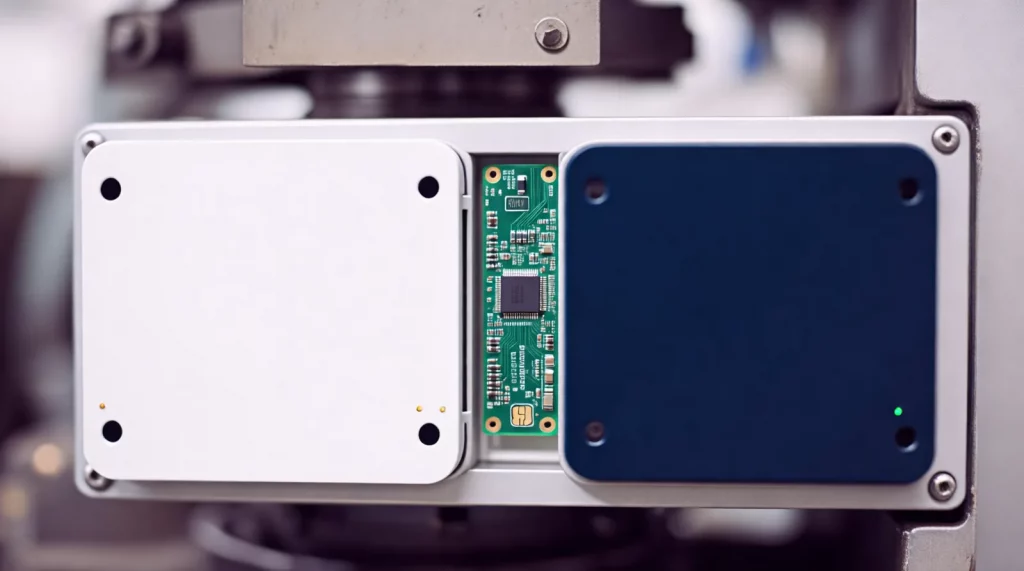
The short answer: put the connectivity hardware into the machine’s bill of materials with the same care as a drive or a sensor. Record the cellular module, the SIM or eUICC, the antenna and the router as components in the Asset Administration Shell (AAS), with the identifiers a service technician will ask for. Machines run for fifteen years or more; modules reach end of life, networks change, and the only reliable answer to “what is inside this cabinet?” is the one written down at delivery.
This article is for machine builders, panel builders and the suppliers who deliver digital packages with their components. It explains why connectivity parts drop out of BOMs, where they fit in the AAS structure, which fields to record, and how the SIM form factor changes what “replacing the part” means.
Why connectivity parts disappear from machine BOMs
The cellular path is usually assembled by three different people. The panel builder fits a router or a module because the specification asked for remote access. The SIM is added later, often during commissioning, from whatever stock was at hand. The antenna is chosen on site when the first signal test fails in the cabinet. None of the three steps goes through engineering change control, so the delivered BOM lists the router at best and the SIM not at all.
The consequences show up in service. A technician in another country cannot tell whether the module supports the bands available there, which SIM was fitted, or whether the antenna on the drawing is the one on the cabinet. When a network generation is switched off, nobody knows which machines are affected without opening them.
Where the connectivity parts fit in the AAS structure
The IDTA submodel template Hierarchical Structures enabling Bills of Material (IDTA 02011) describes how a machine is built from components and sub-assemblies, and an extension based on IEC 81346 (IDTA 02011-1) adds reference designation structures. The cellular module, the SIM and the antenna become entries in that hierarchy under the control cabinet or the gateway that carries them.
Each component entry can then point to its own data. Digital Nameplate (IDTA 02006) covers manufacturer and type identification, and Generic Frame for Technical Data (IDTA 02003) carries rated properties such as supported LTE category and frequency bands. IDTA also lists a Software Bill of Materials template (IDTA 02042) as in development; until it is published, record the module firmware version in the technical data. In a digital twin, this is the static layer: Cheng (2026) describes static mapping as importing geometry, material properties and topology into the twin model, separate from the operating data that updates continuously (Cheng, 2026). The BOM is exactly that static description, and connectivity belongs in it.
Fields to record for the cellular path
The table lists the minimum a service organisation needs. Identifiers such as ICCID and IMEI are operational data: store them in the shell with access limited to service roles, using the access controls described in Part 4 of the AAS specification.
| Component | Fields to record | Why service needs it |
|---|---|---|
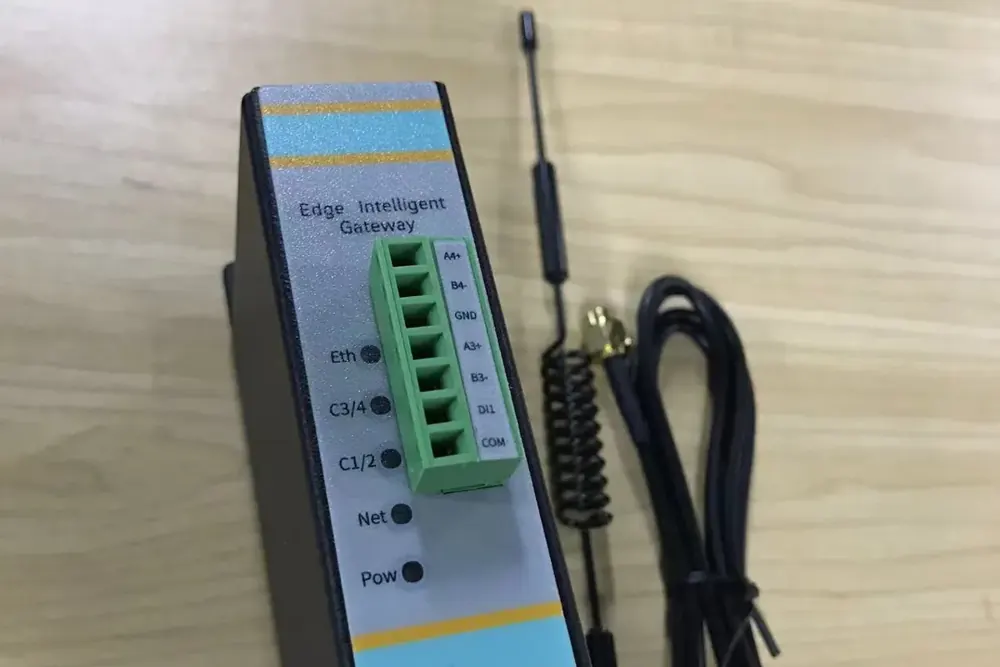
| Cellular module or router | Manufacturer, model, IMEI, LTE category, supported bands, firmware version | Check network compatibility in a new country; plan firmware updates |
| SIM or eUICC | Form factor (2FF, 3FF, 4FF or MFF2 soldered), ICCID, EID for an eUICC, connectivity supplier | Match the machine to its subscription; know whether the SIM can be swapped by hand |
| Antenna | Type, mounting position, cable length and connector | Reproduce the installed signal after a repair or relocation |
| Subscription reference | Contract holder and the APN reference from the SIM delivery sheet | Restore the configuration after a module replacement |
| Network generations in use | 2G, 4G LTE, LTE-M as configured in the device | Identify machines affected by a network switch-off; per-country availability to be confirmed during project validation |
Supplier digital packages: getting the data in at delivery
Part 5 of the AAS specification defines the AASX package format, which lets each supplier deliver the shell for its component as one file. Drive and sensor makers increasingly ship such packages; makers of cellular modules and routers often do not yet, and SIM suppliers almost never. The machine builder therefore usually creates the connectivity entries itself.
The practical rule is to fill them at the factory acceptance test, when the machine is complete and the people who built the cabinet are still in the room. Read the IMEI and ICCID from the device rather than from purchase records, photograph the antenna position, and attach the module’s datasheet to the component entry. If the package is uploaded to the customer over the machine’s own cellular link, check its size first; manuals and drawings can make an AASX file large, and a one-off transfer is better scheduled on a site network or during commissioning than squeezed into a small monthly plan.
Plug-in, soldered and eUICC: how the form factor changes the BOM
A plug-in SIM (2FF, 3FF or 4FF) is a consumable: the BOM entry records the slot, and replacing the card is a service task. A soldered MFF2 SIM is part of the circuit board, so it shares the board’s part number and replacement means a board swap; the advantages in vibration and temperature resistance are discussed in our article on industrial MFF2 eSIM form factors. An eUICC adds a third case: the chip stays, but the operator profile on it can change remotely, so the BOM records the EID as the stable identifier and the current profile as changeable data.
That distinction matters for export machines. A machine with a plug-in SIM can be adapted to a new country by a local technician; one with a soldered eUICC is adapted by a profile change; one with a soldered single-profile SIM may need a hardware change. The trade-offs between card and embedded options are compared in eSIM versus physical SIM for IoT.
Limits of a BOM-based approach
A complete BOM does not make a machine reachable. Whether a module works in a given country depends on local bands, network generations still in service and roaming rules, all of which are confirmed per project. Identifiers recorded at delivery go stale when a technician swaps a part without updating the shell, so the BOM needs the same change discipline as the machine itself. The research cited here describes one digital-twin architecture tested on wind turbines and a bridge; it supports the static and dynamic split, not any figure about BOM practice. For how supplier data is exchanged once machines are in the field, see AAS specification packages and supplier data exchange.
Quanqiu IoT supplies Global IoT SIM cards in plug-in and soldered form and eSIM profiles for machine builders, with CMP records of ICCID and status; form factor, volume and network options are agreed in a project quote.
FAQ
Is there an IDTA template specifically for SIM cards or cellular modules?
Not in the published template list we checked. Use Hierarchical Structures enabling Bills of Material (02011) for the position in the machine, Digital Nameplate (02006) for identification and Generic Frame for Technical Data (02003) for properties such as bands and LTE category.
Should the ICCID and IMEI be stored in the shell at all?
Yes, if access is restricted. Service teams need them to match a machine to its subscription. Limit read access to service roles and avoid publishing them in documents that go to every party in the supply chain.
Who should create the connectivity entries if the supplier does not deliver an AASX file?
The machine builder, at factory acceptance, reading the identifiers from the installed hardware. Waiting for commissioning on site usually means the entries are never made.
How does an eUICC change the record?
The EID identifies the chip for its whole life; the operator profile and its ICCID can change. Record the EID as fixed data and the active profile as data that is updated whenever a profile is switched.
What should happen to the BOM when a module is replaced in the field?
Treat it as an engineering change: update the component entry with the new IMEI, model and firmware, keep the old entry in the change history, and recheck band support for the country where the machine runs.
Official References
- Industrial Digital Twin Association: Specifications of the Asset Administration Shell (Parts 1–5)
- Industrial Digital Twin Association: Submodel templates (IDTA 02003, 02006, 02011, 02042)
- Cheng Yongheng (2026). Architecture Design and Key Technology Implementation of an IoT-Based Digital Twin System (in Chinese). 物联网技术, (19), 142-144.