Asset Administration Shell over Cellular IoT: Digital Twin Data, Supplier Packages and Aftermarket Access
By jietion, Business Development (BD) at Quanqiu IoT · Published · Updated
Definition: An Asset Administration Shell (AAS) is the standardised digital twin of an industrial asset; an IoT SIM in an edge gateway carries the operational data that keeps the shell current when the asset sits outside the owner’s network.
The short answer: most of an AAS is static. Nameplate data, technical data and documentation are exchanged once, as a package, usually between companies and not over the device’s own SIM. Only the operational submodels change often, and those are the part that crosses the cellular link. Size the data plan for those submodels, decide who may read them, and keep the static package where your partners can reach it without touching the machine.
What the AAS specifications define
The Asset Administration Shell came out of the German Plattform Industrie 4.0 work and is now maintained by the Industrial Digital Twin Association (IDTA); IEC 63278-1 sets out its structure as an international standard. The specification is published in parts. Part 1 defines the metamodel: shells, submodels and their elements. Part 2 defines the API for reading and writing shells over a network. Part 5 defines the AASX package format, a single file that carries a shell, its submodels and attached documents. IDTA publishes submodel templates such as Digital Nameplate, Technical Data, Contact Information and Handover Documentation, so that two suppliers describe the same thing in the same way.
Static packages and live submodels: who sends what, and how
| AAS content | How often it changes | Usual transport | Over the device SIM? |
|---|---|---|---|
| Digital Nameplate, Technical Data | Once per asset or revision | AASX package between supplier and buyer | No |
| Handover Documentation (manuals, certificates) | At delivery and on revision | AASX package or document portal | No; files are large |
| Operating state, counters, alarms | Seconds to hours | Gateway to AAS server via API, MQTT or OPC UA | Yes |
| Maintenance records, spare part usage | Per service event | Service app or gateway to AAS server | Sometimes |
| Energy and condition data | Minutes | Edge aggregation, then upload | Yes |
Exchanging supplier data as AASX packages is a procurement discipline in its own right. Ask suppliers which submodel templates and which specification version they deliver, and check the package in a viewer before acceptance. A package that loads but leaves half the nameplate fields empty is a common outcome.
Keeping the twin current without wasting data
A digital twin is only as current as its slowest link. Research on IoT-based twin architectures describes five layers, from sensing through transmission, edge, platform and application. Edge preprocessing compresses raw data to 10 to 30 percent of its original volume, and incremental compression cuts transmission by 60 to 80 percent (Cheng, 2026). In the same work, a wind farm case sampled 48 points per turbine at 500 Hz. Sending that raw over a cellular link would be impractical. Sending features, alarms and periodic summaries is not.
Apply the same split to an AAS. The gateway computes the values that the operational submodel needs, such as running hours, cycle counts, last fault, and energy per shift, and updates the shell on change or on a schedule. Raw waveforms stay at the edge or are uploaded on request.
Governance across sites and companies
Twin data crosses company boundaries more than most plant data. The machine builder wants condition data for service; the operator wants maintenance history; a component supplier wants failure data for its own parts. Agree three things before data flows:
- Ownership. Who owns each submodel, and who may change it.
- Access. Which partners may read which submodels, through which API endpoint, with which credentials.
- Retention. How long operational data is kept, and what happens to it when the service contract ends.
For multi-site operators, keep one AAS registry and one identifier scheme for assets across all sites, so that a pump moved from one plant to another keeps its history.
Aftermarket service and spare parts
The aftermarket is where an AAS pays for itself. A service technician who can open the shell of a machine and see its exact configuration, installed component revisions and recent alarms arrives with the right spare part. Spare part data in the shell, such as part numbers, compatible replacements and supplier contacts, cuts identification errors. For assets in remote locations, the cellular link makes this possible without a site visit to read a nameplate. Keep the access path read-only for most partners, and log every read of the operational submodels.
Security of the twin’s data path
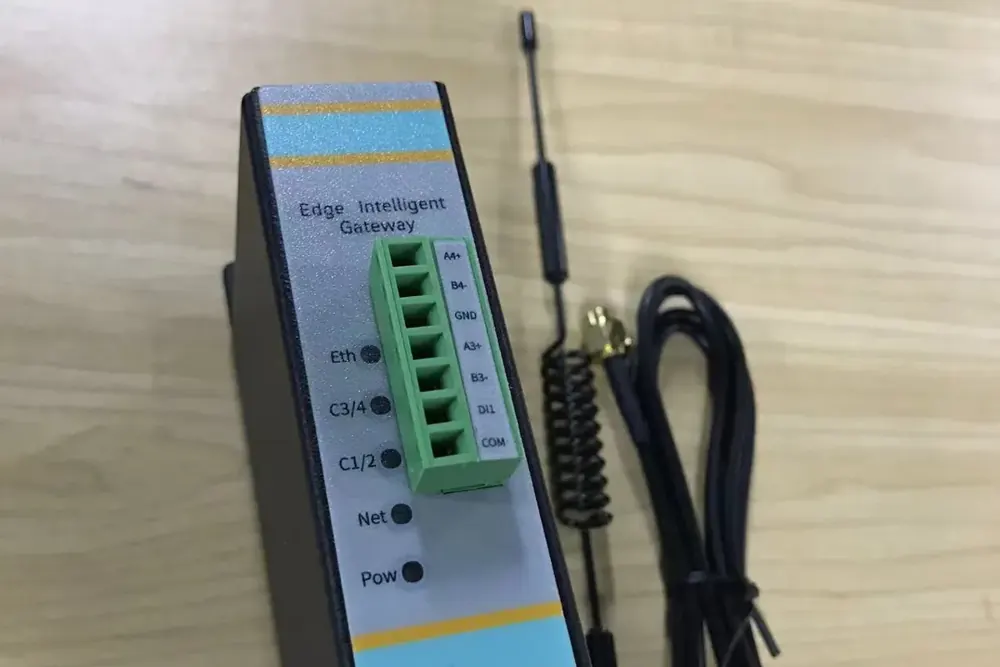
The AAS API exposes an asset’s description and state; treat it as part of the plant’s attack surface. Do not expose the gateway’s AAS endpoint on a public address. Have the gateway push updates outbound to the AAS server, authenticate it with a certificate, and apply the zone and conduit approach described in our ISA/IEC 62443 guide for cellular conduits. Machine builders choosing between embedded and removable SIMs for these gateways can compare them in eSIM versus physical SIM for OEM manufacturing. For gateways that publish over MQTT on narrow links, our MQTT Sparkplug B on Cat-M1 and NB-IoT article shows how to budget messages.
Quanqiu IoT supplies Global IoT SIM and eSIM connectivity for edge gateways that feed digital twin platforms, with each country’s network technologies confirmed in the quote. For multi-site or multi-country fleets, request a project quote through the contact page.
FAQ
Does an Asset Administration Shell need a constant connection?
No. Static submodels are exchanged once. Operational submodels can be updated on change or on a schedule, and the gateway can buffer updates while offline.
How much data does an AAS-connected gateway use?
It depends on the operational submodels and their update rate. Summaries and alarms every few minutes need far less than streaming raw sensor data; measure during a pilot.
What is an AASX file?
It is the package format defined in Part 5 of the AAS specification. It carries a shell, its submodels and attached documents in one file for exchange between companies.
Which submodel templates should suppliers deliver?
At minimum Digital Nameplate and Technical Data; Handover Documentation and Contact Information are common additions. Name the template versions in the purchase order.
Who should be allowed to read a machine’s twin?
The asset owner decides. Typical access is read-only for the OEM’s service team and component suppliers, with every read logged.
Official References
- Industrial Digital Twin Association: AAS specifications (metamodel, API, AASX package)
- ISA: ISA/IEC 62443 Series of Standards
- Cheng Yongheng (2026). Architecture Design and Key Technology Implementation of an IoT-Based Digital Twin System (in Chinese). 物联网技术, (19), 142-144.