Modbus over Cellular: Retrofit, Polling Design, Security and Handover for Remote Sites
By jietion, Business Development (BD) at Quanqiu IoT · Published · Updated
Definition: A Modbus-over-cellular retrofit links existing Modbus RTU or TCP devices to a central system through a gateway whose IoT SIM replaces the leased line or local network.
The practical answer: Modbus works over cellular, but not by stretching the plant’s polling loop across the mobile network unchanged. Put a gateway next to the devices, let it poll locally, and send the results upstream either on a schedule or when values change. Decide early how the central system reaches the gateway, because ordinary mobile connections sit behind carrier NAT and cannot be polled from outside without a private APN, a VPN or a tunnel that the gateway opens itself.
What the Modbus specification gives you, and what it leaves out
The Modbus Application Protocol defines a simple request and response exchange. A master (client) asks; a slave (server) answers. Common function codes are 01 and 02 for coils and discrete inputs, 03 and 04 for holding and input registers, 05 and 06 for single writes, and 15 and 16 for multiple writes. A protocol data unit carries at most 253 bytes, which limits a single read of holding registers to 125 values. Modbus RTU runs over serial lines such as RS-485; Modbus TCP wraps the same PDU in a 7-byte MBAP header and normally uses TCP port 502.
The original protocol has no authentication and no encryption. Any host that can reach port 502 can read or write registers. The Modbus Organization later published Modbus/TCP Security, which carries Modbus inside TLS with X.509 certificates, usually on port 802, and lets the server apply role-based authorisation. Field support is still uneven, so most brownfield sites rely on a gateway or VPN to supply the missing protection.
Polling or report by exception: sizing the data plan
Traffic depends far more on the design than on the register count. Consider one gateway reading 10 holding registers from one meter every 60 seconds and forwarding them as Modbus TCP. Request and response together are about 41 bytes of Modbus data, but TCP/IP headers and acknowledgements add roughly 160 bytes, so each poll costs around 200 bytes on the air. That is about 290 KB per day and close to 9 MB per month for a single device, before keep-alives, reconnects and TLS handshakes. These are worked estimates; measure your own gateway during the pilot.
A gateway that polls locally and sends a compact batch every 15 minutes, plus immediate alarms, can cut that to a fraction. Field studies show the pattern: a boiler-expansion monitoring system at a 660 MW coal-fired unit polled 24 laser sensors at 8 points over a Modbus fieldbus and sampled every 30 seconds, with parsing and alarm thresholds handled at a central server (Xu et al., 2026). The same data, sent from a remote site over cellular, would be aggregated at the edge first.
| Design | Who starts the session | Data use | Addressing need | Typical fit |
|---|---|---|---|---|
| Central master polls Modbus TCP over cellular | Control centre | Highest; headers dominate | Reachable gateway IP: private APN or VPN | Small sites already on a SCADA polling scheme |
| Gateway polls locally, sends batches | Gateway | Low to medium | Outbound only | Meters, tanks, environmental sensors |
| Gateway reports by exception plus heartbeat | Gateway | Lowest | Outbound only; inbound path for maintenance | Substation alarms, pump stations |
| Transparent serial tunnel (RTU over TCP) | Either side | Medium; timing sensitive | Tunnel endpoint | Legacy software that only speaks RTU |
Latency and timeouts on a mobile link
Modbus masters often use response timeouts tuned for a local bus. Over cellular, round trips are longer and vary with radio conditions and idle-to-connected transitions. A 5G industrial gateway test measured Modbus TCP round trips of 8.7 to 15.2 ms on a standalone 5G network, falling to about 8 ms with uRLLC features and slicing (Chen et al., 2025). Typical 4G LTE and LTE-M connections are much slower and less predictable than that laboratory set-up, so set master timeouts and retry counts for the radio you will actually deploy, and keep control loops local. Our substation polling article covers polling schedules across many outstations.
Security for brownfield Modbus sites
- No public inbound address. Port 502 on a public IP will be found by scanners within hours.
- Segment at the gateway. The cellular interface should reach only the Modbus devices it serves, with write function codes blocked unless a maintenance window is open.
- Encrypt the conduit. Use IPsec or TLS between the gateway and the central system; adopt Modbus/TCP Security where both ends support it.
- Certificate-based onboarding. When gateways enrol with certificates rather than shared passwords, a lost device can be revoked without touching the rest of the fleet.
- Separate service access. Third-party maintenance companies should use their own accounts and time-limited sessions, logged against the SIM’s session records.
For tunnel designs, see private APN and IPsec for water-utility RTUs; for maintenance windows at water sites, see Modbus RTU maintenance windows and alarm backhaul.
Meter rollouts, M-Bus concentrators and SIM ownership handover
Energy and water submetering projects often mix Modbus energy meters with wired or wireless M-Bus (EN 13757) meters read by a concentrator. The concentrator, not each meter, holds the SIM. Roll out in phases: one building or feeder first, check the register map and reading completeness, then expand. Write down the register map version for each meter model, because a firmware change that moves a register breaks every dashboard downstream.
Plan the commercial handover as carefully as the technical one. During installation the integrator usually owns the SIMs; after acceptance the operator may want them on its own account. Agree who pays for data during commissioning, how SIMs are transferred, and which party may still log in for warranty work. Warranty boundaries need the same clarity: if a third party changes a register mapping, the OEM should be able to see that in the logs.
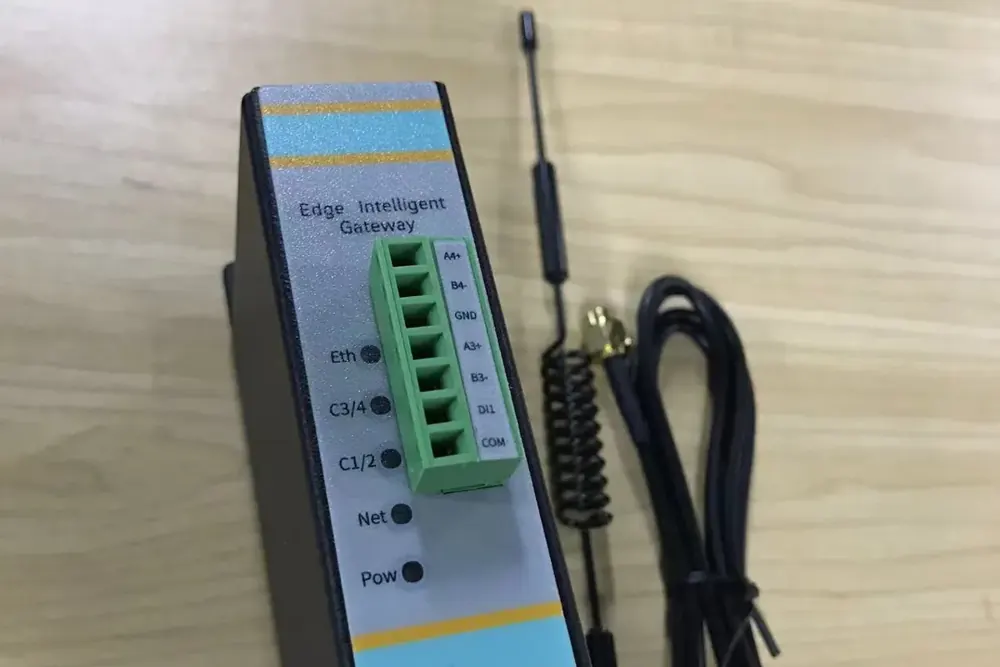
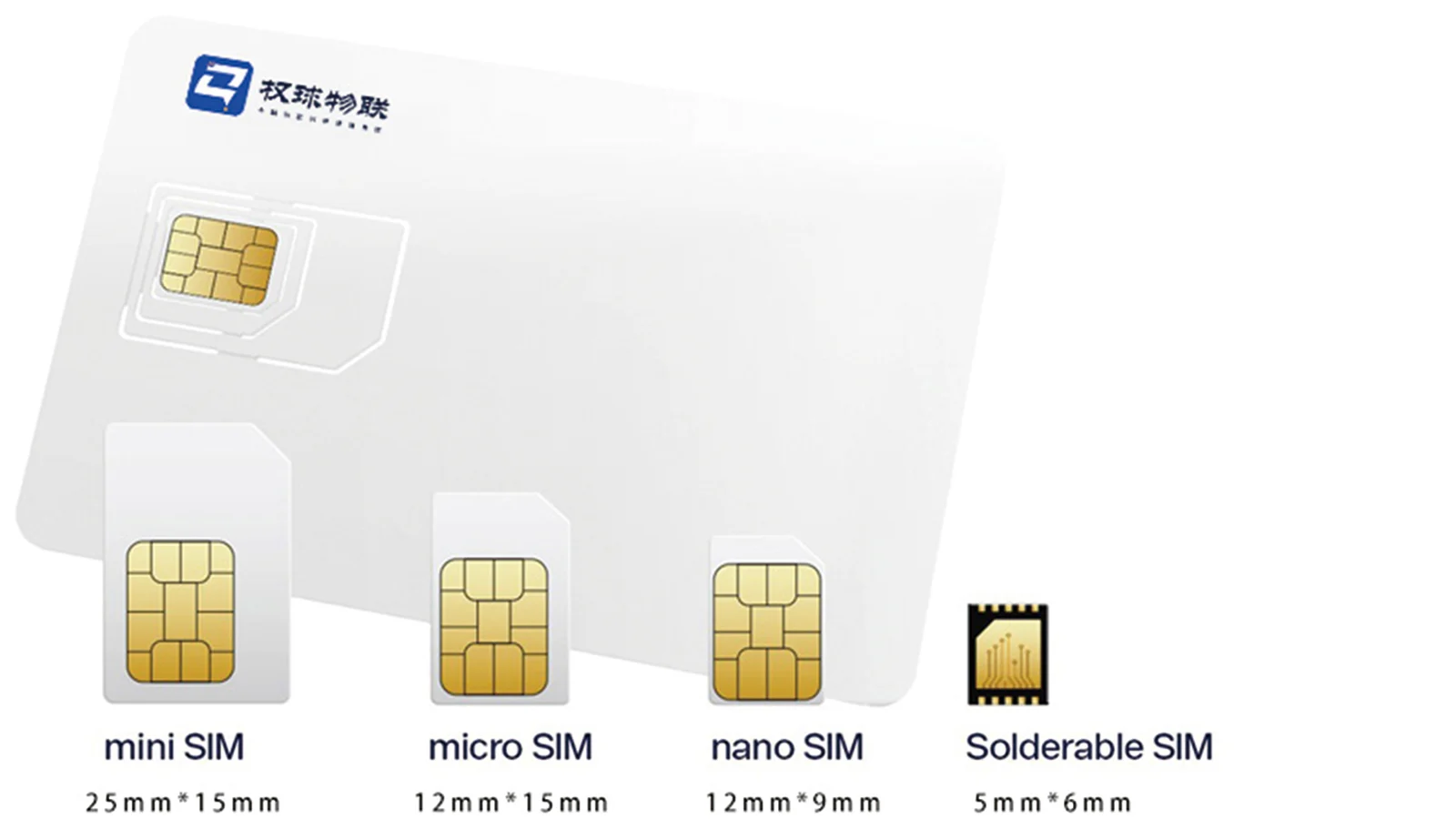
Quanqiu IoT supplies Global IoT SIM cards for Modbus gateways and meter concentrators, with SMS enabled per project and each country’s network technologies confirmed in the quote. Pooled data, SIM ownership transfer and APN design are agreed in a project quote through the contact page.
FAQ
Can a SCADA master poll Modbus TCP devices over a normal IoT SIM?
Usually not directly. Standard mobile data sits behind carrier NAT, so inbound connections fail. You need a private APN with routable addresses, a VPN, or a gateway that opens an outbound tunnel.
How much data does a Modbus gateway use per month?
It depends on the design. Polling 10 registers every minute over TCP costs roughly 9 MB per month in our estimate; local polling with 15-minute batches can be far lower. Measure during the pilot.
Is Modbus/TCP Security widely supported?
Support is growing but many installed devices lack it. Check each device and the SCADA software; where one side lacks it, protect the link with a VPN.
Should I tunnel Modbus RTU over cellular?
Only when legacy software requires it. Serial tunnels are sensitive to delay and inter-frame timing; a gateway that converts to Modbus TCP or MQTT is easier to operate.
Who should own the SIMs after commissioning?
Agree it in the contract. Common models are integrator-owned SIMs re-billed to the operator, or a transfer to the operator’s account at acceptance.
Official References
- Modbus Organization: Modbus specifications, including Modbus Application Protocol and Modbus/TCP Security
- NIST SP 800-82 Rev. 3: Guide to Operational Technology (OT) Security
- Xu Wei et al. (2026). Online Monitoring System for Boiler Expansion in a Coal-Fired Power Plant Based on Modbus (in Chinese). 物联网技术, (15), 30-33.
- Chen Dejin et al. (2025). Research on End-to-End Low-Latency Communication for Industrial Gateway Based on 5G uRLLC (in Chinese). 邮电设计技术, (6), 30-33. doi:10.12045/j.issn.1007-3043.2025.06.006