IoT SIM for Construction Site Monitoring: 4G Cameras, Formwork Sensors and Temporary Connectivity
By jietion, Business Development (BD) at Quanqiu IoT · Published · Updated
Definition: An IoT SIM on a construction site connects cameras, structural sensors and equipment monitors to a cellular network for the months the project runs, without waiting for a fixed line.
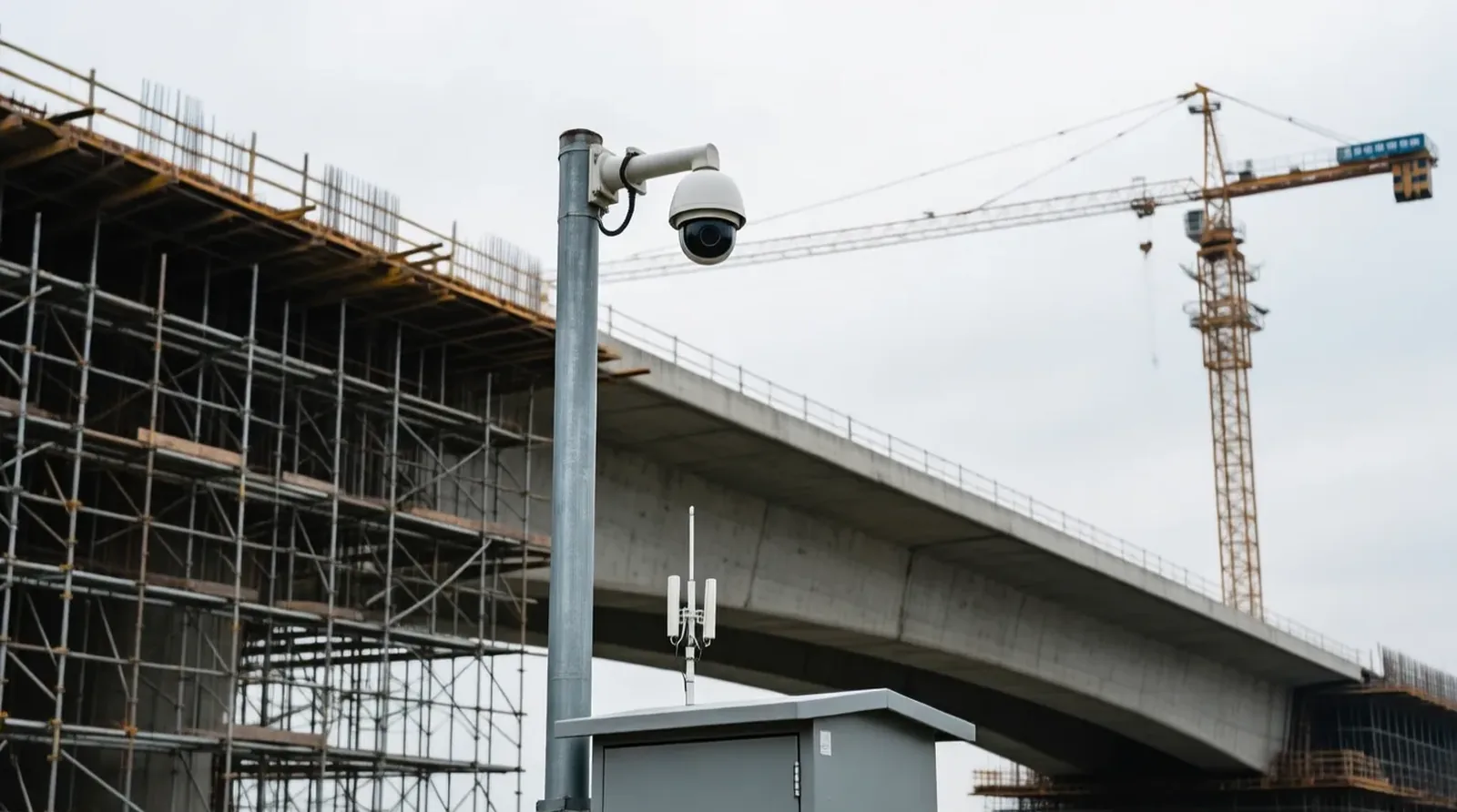
A construction site has power and staff long before it has a fixed internet line, so 4G site cameras and monitoring sensors normally go online through cellular SIMs. The sensors send very little. Cameras send a lot, and they set the size of the plan. Plan by device type, process alarms at the edge, and decide in the contract what happens to each SIM when the work moves on or stops.
Why structural monitoring is a connectivity problem
Manual surveying gives a reading every few days. A structure under load can move in hours. A bridge project that monitored its high formwork support before, during and after the concrete pour found that lateral displacement rose from 0.1 mm to 4.2 mm and settlement from 0.8 mm to 7.8 mm while the concrete was going in, then levelled off once the load stopped growing (Hao, 2026). The pour is the period when someone needs to see the trend at once, and it often happens at night or over a weekend, with the engineer off site.
That system used three layers: sensors on the formwork, a wireless network, and an application that raises the warning. NB-IoT carried the sensor data because the nodes needed low power and long service through construction, and edge nodes on site screened the readings and flagged anomalies before anything went upstream (Hao, 2026). Radar deformation measurement and video added a picture of how the whole support was moving. The paper reports one bridge and does not publish alarm thresholds or sensor counts, so the thresholds for any other structure come from its own design engineer.
What gets connected on a typical site
Most sites end up with five groups of devices on cellular links. Formwork and temporary works sensors read displacement, settlement and tilt. Tower-crane and hoist monitors report load, moment, wind speed and limit alarms. Dust and noise monitors send averages to meet the permit. Cameras cover gates, stockyards and the crane hook. On linear works such as tunnels and bridges, deformation points are spread over kilometres.
Tunnels show why the last group is hard to wire. A study on a soft-rock tunnel describes total-station surveys taken during drilling and shotcreting, when noise, dust and poor light reduced accuracy and each round needed the instrument set up again (Zhang et al., 2023). The authors propose a small GPS locator sealed in a box behind each reflective target and sending its readings wirelessly to a computer, noting that eight decimal places of latitude and longitude correspond to about 1 mm. It is a proposal without field results, and satellite reception inside a tunnel is limited, so treat it as a design idea for portals and open cuts. On most tunnel jobs the cellular gateway sits at the portal and the instruments inside reach it by cable or a local radio link.
Plan sizing by device type
Sensors and cameras differ by three or four orders of magnitude, so size them separately and pool where the supplier allows it.
| Device | What it sends | Typical network | How to size the data |
|---|---|---|---|
| Formwork displacement and settlement sensors | Short readings, more often during a pour | NB-IoT or LTE-M where offered, or a Cat 1 gateway | Readings per day times message size; usually a few MB a month |
| Tower-crane and hoist monitors | Load, moment, wind, alarms | LTE Cat 1 | Reporting interval during working hours; to be confirmed during project validation |
| Dust and noise monitors | Averages every few minutes | LTE Cat 1 or NB-IoT | Small; check whether the authority’s platform needs raw data |
| Radar or camera-based deformation units | Results from on-site processing | LTE Cat 1 or Cat 4 | Depends on whether raw data leaves the site; to be confirmed during project validation |
| 4G site cameras | Live view, recorded clips, timelapse | LTE Cat 4 or higher | Bitrate times hours of upload |
For cameras the arithmetic is simple. A 1 Mbit/s stream is about 450 MB per hour, so one hour of live view a day comes to about 13.5 GB a month. Continuous upload of the same stream is about 324 GB, which is why most site cameras record locally and upload only events, timelapse frames or the clips someone asks for. Confirm the bitrate on the camera’s own settings page before you choose a plan.
Temporary sites, moving equipment and edge processing
A site SIM has a different life from a meter SIM. It is fitted for one phase, may sit in a store for months, then goes into the same crane monitor on another site, sometimes in another country. Agree in advance how SIMs are activated, suspended and moved, and whether a suspended SIM still costs a monthly fee. Pooling data across all devices on a project stops one busy camera from running out while the sensors use a fraction of their allowance.
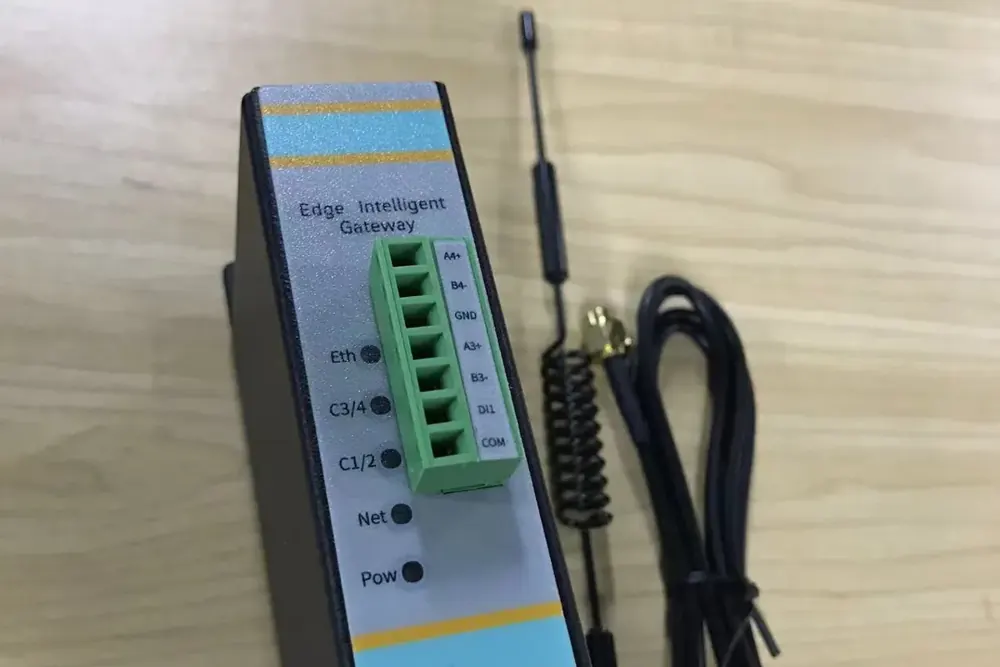
Edge processing keeps the cellular link small and the alarms fast. Let the gateway or an edge node compare readings with the engineer’s thresholds and send the alarm at once, with raw data uploaded in batches. During a pour, raise the sampling rate for the hours the load is building and drop it afterwards. Rules for keeping these gateways separate from vendor remote access are discussed in patch management windows and remote support separation.
Site conditions that break the link
Signal on a site changes as the structure grows. Concrete cores, steel decking and basement levels all cut reception, and a gateway that worked at ground level can lose the network once three floors are up around it. Mount antennas outside, on the hoarding or a mast, and check signal again after each major stage. Temporary power is the second weak point. Site distribution boards are switched off at night or during electrical work, so sensors and gateways that must keep reporting need their own battery or a small solar panel.
Theft is the third. Cameras and routers on open sites are taken, and a SIM taken out of a camera can run up data in another device. An IMEI lock and a usage alert per SIM limit that. When construction ends and the building is handed over, permanent systems such as lift monitoring move to their own contracts; see IoT SIM for elevator monitoring and building safety systems.
Monitoring does not replace inspection. The safety topics on OSHA’s construction pages, such as falls, trenching and cranes, still depend on people on site. Sensors only give the trend in between inspections.
Quanqiu IoT supplies Global IoT SIM cards for site gateways, cameras and equipment monitors. In past projects, construction-site terminals such as tower-crane, hoist and dust monitors have run on plans from 30 MB to 30 GB a month. Networks per country and plan terms are set in the project quote through the quote process.
FAQ
Do 4G construction site cameras need a special SIM?
They need a data SIM sold for devices, with an allowance sized from the camera’s bitrate and upload hours. Check that the plan terms allow use in cameras and routers, and set a usage alert so a stream left open is caught early.
How much data does a 4G site camera use?
About 450 MB for each hour of a 1 Mbit/s stream. One hour of live view a day is roughly 13.5 GB a month; event clips and timelapse use far less than continuous upload.
Is NB-IoT good enough for formwork and structural sensors?
For sensors that report readings and alarms, yes, where the network offers NB-IoT to the SIM in use. A bridge formwork project used it for exactly that. Video and radar data need LTE.
What happens to the SIMs when the project ends?
That depends on the contract. Agree before the first order whether SIMs can be suspended, moved to the next site or cancelled, and what each state costs.
How do sensors inside a tunnel reach the cellular network?
Usually through a gateway at the portal. Instruments inside connect to it by cable or a local radio link, because cellular and satellite reception deep in a tunnel is poor or absent.
Official References
- OSHA: Construction industry
- GSMA: Mobile IoT (LTE-M and NB-IoT)
- Hao Yi (2026). Application and Research of Safety Monitoring Technology for High Formwork Support Systems in Concrete Bridge Construction (in Chinese). (10), 145-147.
- Zhang Dahai, Liu Ruihui, Xi Weizheng (2023). Application of GPS Technology in Tunnel Monitoring Measurement (in Chinese). 公路, (7), 55-57.