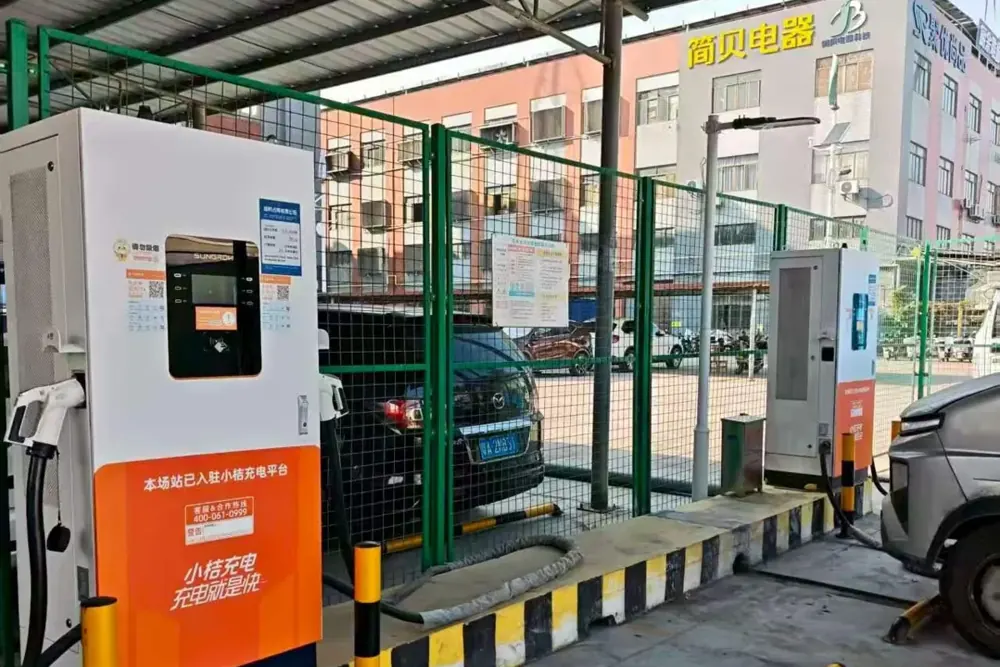
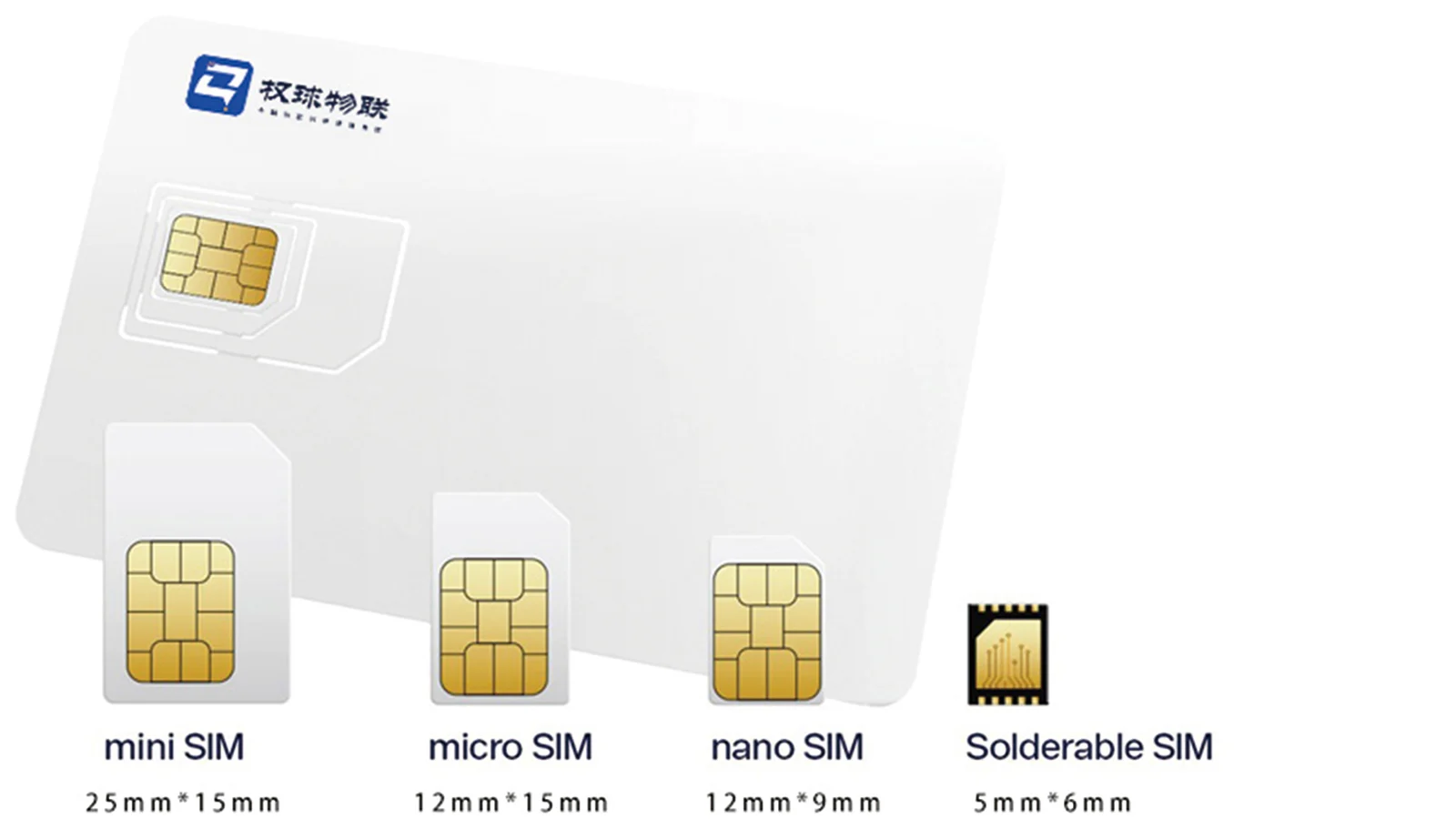
EV Charger 4G or Wi-Fi: Multi-Network SIMs and Dead-Zone Fixes for Charging Hubs
By jietion, Business Development (BD) at Quanqiu IoT · Published · Updated
Definition: At an EV charging hub, the IoT SIM in each charger or gateway carries OCPP traffic to the management system, and a multi-network SIM lets it switch operators when one has no usable signal.
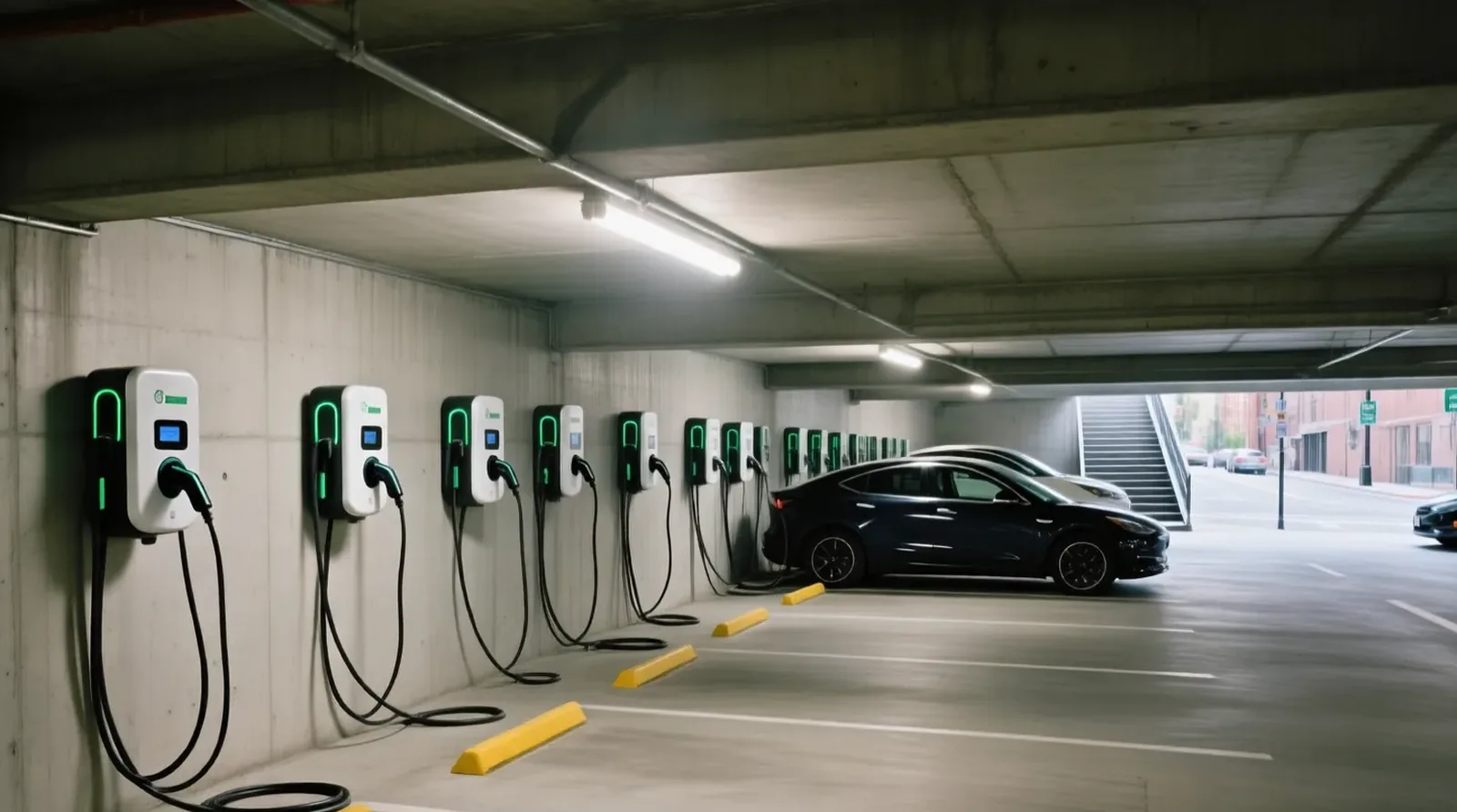
For a public or fleet charging hub, 4G (or LTE-M where available) is usually the right primary link, and Wi-Fi is the exception: use Wi-Fi or Ethernet only where the charging operator owns and monitors that network. The bays that go offline are almost always underground or behind thick concrete. Move the radio to where the signal is, add an external antenna, or give the device a second operator, in that order of reliability. A multi-network SIM fixes weak coverage from one operator. It does nothing in a basement that no operator reaches.
What a charger needs from its connection
A charger’s traffic is small but it must keep flowing. A 2021 requirements analysis for 5G in the Chinese grid lists EV charging stations and piles at a latency under 5 s, at least 8 kbps of bandwidth and packet loss below 0.1% (Chen et al., 2021). Those are planning targets, not measurements, and they describe a link that is modest in speed and strict about staying up.
OCPP 1.6 runs JSON over a WebSocket that stays open on a single TCP connection: the charge point is the client, the management system the server, and the heartbeat interval is set when the charger boots (Du et al., 2022). The ITU-T Y.4230 recommendation for public smart charging, published in January 2025, recommends MQTT between the smart charging platform and the chargers and asks for a secure, reliable and stable network, wired or wireless (Liu et al., 2025). Neither standard cares which bearer you use. Both assume it is there.
When the link drops, OCPP lets a charger keep working offline with a local authorisation list and send its transaction records once the connection returns. Billing survives a short outage. Remote start from an app, live status for drivers and fault alarms do not.
4G, Wi-Fi or Ethernet at a commercial hub
Studies of charger monitoring describe all three bearers. A 2025 review of charger fault diagnosis has voltage, current and temperature data reaching the platform over 4G, 5G or Wi-Fi, with the platform trying a remote restart when communication fails (Huang et al., 2025). A 2026 prototype went the other way and used an ESP8266 as a local Wi-Fi access point with no cloud at all, reporting response under 0.5 s and packet loss under 0.3% in lab tests (Duan et al., 2026). That design shows local Wi-Fi works well for a phone standing next to the charger. It does not connect the charger to an OCPP back end.
| Bearer | Works well when | Typical failure at hubs | Who owns the problem |
|---|---|---|---|
| 4G / LTE-M with IoT SIM | The charging operator wants an independent link at every site | Underground bays, single-operator SIM in a weak spot | Charging operator and SIM provider |
| Site Wi-Fi | The operator controls the access points | Router reboots, password or captive-portal changes by the site owner | Often the landlord, not the charging operator |
| Ethernet to a site router | Trenching or cable trays already exist | Router or upstream line fails for the whole site | Whoever owns the router and line |
| RS-485 bus to one cellular gateway | Many chargers in a garage with signal only near the ramp | Gateway or its SIM fails, all chargers drop together | Charging operator |
Cellular wins most hub decisions for one reason: the charging operator can see and fix it without asking a third party. For mixed estates of AC chargers and energy meters, our article on IoT SIMs for EV chargers and energy monitoring covers plan sizing.
Why underground bays go dark, and what a second network can fix
Concrete slabs, ramps and steel all take margin from the radio link. A 2026 review of low-power networks notes that even NB-IoT, designed for a maximum coupling loss of 164 dB, loses that margin quickly in underground ducts and dense reinforced concrete (Han, 2026). Standard 4G has less to spare than NB-IoT, so a basement that defeats NB-IoT will usually defeat a 4G charger too.
A multi-network SIM attaches to whichever permitted operator it can hear best. At a hub where operator A reaches level -1 weakly and operator B reaches it well, that solves the problem outright. Where no operator reaches level -2, the SIM changes nothing and the radio has to move. A survey with a phone is not enough to tell these cases apart, because phones and charger modems differ in antenna and bands. Test with the charger’s own module, at its mounting height, on every operator the SIM can use, and log signal strength and quality per bay. The pass threshold for your chargers is to be confirmed during project validation.
Site designs that keep a garage online
A 2022 thesis on a shared charging system wires chargers in a garage on an RS-485 bus to one 4G module, which serves many piles and cuts SIM data cost, with up to 255 nodes on a bus (Peng, 2022). Put that gateway where the signal is, often at the ramp or a light well, and the bays below only need a cable. The trade-off is a single point of failure. A dual-SIM or multi-network gateway removes part of that risk, and a spare gateway on the shelf removes most of the rest.
The second fix is an external antenna on a low-loss cable run to a spot with signal. It keeps one SIM per charger and suits sites where the bus wiring is impractical. Measure the cable loss and check the antenna covers the bands the module uses.
| Fix | When it works | Effort | Residual risk |
|---|---|---|---|
| Multi-network SIM in each charger | At least one permitted operator has usable signal in the bay | Low, no site works | Does nothing where all operators are absent |
| External antenna per charger or cluster | Signal exists within a cable run of the charger | Medium, cable routing | Cable damage, connector water ingress |
| Gateway at the ramp with RS-485 or Ethernet to chargers | Many chargers, signal only at one point | Medium to high, bus wiring | Gateway failure takes all chargers offline |
| Indoor repeater or small cell | Large car parks also serving drivers’ phones | High, operator approval in many countries | Approval and ownership: to be confirmed during project validation |
Hubs that settle sessions with roaming partners have one more dependency on the link; see OCPI roaming hubs and settlement links.
Fallback tests before the site is handed over
Prove the backup before drivers find out it does not work. Disconnect the antenna or block the primary operator, then start, run and stop a session. The charger should keep charging, authorise from its local list and deliver the transaction once it reconnects. Time how long it takes to come back online and compare that with the heartbeat interval.
A 2026 safety-risk model for chargers scores communication time in bands, with 1 s or less in the best band and more than 5 s in the worst, and its case-study charger measured 1.48 s (Jiang, 2026). The bands are the author’s scoring scale, but they make a usable acceptance target. Repeat the test at night and at the busiest hour, because cell load changes the result, and record which operator each charger ends up on. That record is what the support team will need the first time a bay goes quiet.
Global IoT SIM works with more than 400 operators across 180+ countries and regions, and which networks a charger can use at each site is confirmed in the project quote. eSIM profiles and CMP access for large charger fleets are part of the same quote.
FAQ
Should an EV charger use 4G or Wi-Fi?
Use 4G where the charging operator needs a link it controls, which covers most public and fleet hubs. Wi-Fi or Ethernet is fine where the operator also owns the network and can monitor it.
Does a multi-network SIM fix an underground car park?
Only if at least one operator the SIM can use has signal there. Measure every operator with the charger’s own module at each bay before deciding.
What happens to a charging session when the connection drops?
Under OCPP the charger can continue, authorise users from its local list and send the transaction once it reconnects. Remote start, live status and alarms stop until the link returns.
How much data does an OCPP charger use?
Little: heartbeats, status changes, meter values and transactions. The amount depends on the heartbeat and meter-value intervals set in the charger, so measure it on a pilot site before choosing a plan.
Is one cellular gateway for a whole garage a good idea?
It is the cheapest fix for a garage with signal only near the entrance, but it makes the gateway a single point of failure. Use a dual-SIM gateway and keep a spare.
Official References
- Open Charge Alliance: Open Charge Point Protocol (OCPP)
- Open Charge Alliance: OCPP security operations guide
- Chen Wenwei, Zhu Yukun, Zhang Ningchi et al. (2021). Research on 5G Key Technologies and Application Scenarios for Energy Internet (in Chinese). 电力信息与通信技术, 19(08), 83-90. https://doi.org/10.16543/j.2095-641x.electric.power.ict.2021.08.012
- Du Mingming, Cui Likun, Feng Xuyong et al. (2022). Implementation of OCPP 1.6 Based Communication Between Charging Station and Charging Station Management System (in Chinese). 现代电子技术, 45(15), 10-14.
- Liu Chang, Wang Jin, Zhang Yibing (2025). Analysis of the Recommendation ITU-T Y.4230, Requirements and Capability Framework for a Public Smart Charging Service for Electric Vehicles (in Chinese). 国际标准化, 191-200.
- Huang Dedao, Huang Anlai, Du Xuefeng (2025). Research on Real-Time Fault Diagnosis of Internet of Things Technology in Charging Pile Operation and Maintenance Management (in Chinese). 信息与电脑, (14), 108-110.
- Duan Tingting, Feng Fayi, Feng Guihua et al. (2026). Design and Implementation of an Intelligent Charging Pile Monitoring System Based on STM32 and ESP8266 (in Chinese). 现代信息科技, 10(15), 194-198.
- Han Baohua (2026). Optimization of Low-Power Wide-Area Network Communication Technology for the Internet of Things (in Chinese). 中国宽带, 22(10), 49-51.
- Peng Ye (2022). Design of Electric Vehicle Shared Charging Pile System (in Chinese). Master’s thesis, Hunan University.
- Jiang Jingjing (2026). Comprehensive Evaluation of Safety Risk of Charging Piles Based on Improved PSO Algorithm and Variable Weight Theory (in Chinese). 电工材料, (1), 78-86.