Industrial MFF2 eSIM Soldered Form Factors and High-Vibration Environment Reliability
作者:jietion,商务拓展(BD),Quanqiu IoT · 发布于
Definition: An MFF2 soldered eSIM is an embedded SIM chip soldered directly onto a device’s communication module, providing the identity and profile anchor for cellular IoT connectivity in vibration-exposed industrial equipment.
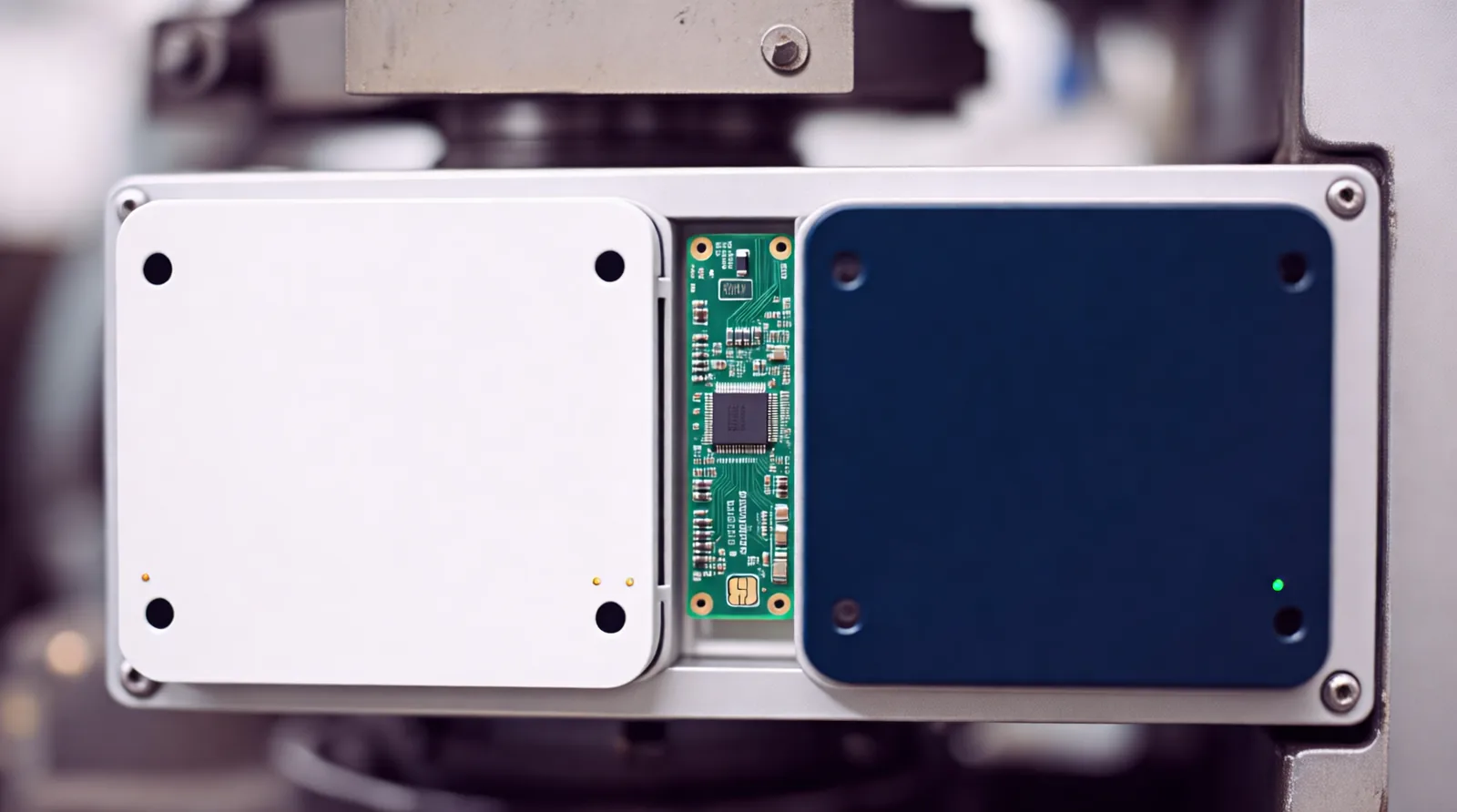
For industrial devices that will be deployed at scale across multiple locations or in challenging-to-reach environments, the practical question is not whether a soldered eSIM is more robust than a pluggable SIM, but which form factor, environmental validation plan, and remote provisioning route your procurement team can defend in a project quote. The GSMA SGP.32 eSIM IoT Technical Specification V1.1, published 26 April 2024, was developed specifically to enable over-the-air Remote SIM Provisioning for network- and UI-constrained IoT devices, and it defines the architecture, roles, interfaces, eUICC architecture, profile protection and delivery, security, certificate management, profile policy and state management, and eIM package structures and procedures that a soldered eSIM deployment depends on. This page maps those published facts to the selection, validation, and quoting decisions that OEMs, hardware integrators, and industrial operations teams face when specifying MFF2 soldered eSIMs for high-vibration equipment.
Why It Matters
Physical SIM cards require manual installation and physical swapping to change or update MNO profiles, which the GSMA describes as impractical for IoT devices deployed at scale in multiple locations or in challenging-to-reach environments. That operational reality is the core reason soldered eSIM form factors matter to procurement. When a device is mounted on a train, inside a distribution automation cabinet, or on a remote industrial asset, a SIM that loosens, oxidizes, or needs physical replacement converts a connectivity issue into a truck roll. Peer-reviewed work on heavy-haul railway LTE equipment found that SIM cards can fail to be recognized under vibration because of circuit design, card-socket spring contacts, oxidation, and debris; the authors proposed cleaning and dry lubricant films but concluded that contact faults cannot be fully eliminated, and recommended an embedded ESIM solution with an adapter board to improve reliability (He, 2025). A separate study of distribution automation terminals reported that SIM card loosening, rust, contamination, moisture, or parameter setting errors cause about 18% of total terminal offline events, and that terminal equipment abnormalities including SIM card loosening account for nearly half of all offline events (Liu et al., 2018). Those findings describe the studied railway and distribution settings only, but they explain why industrial buyers treat the SIM form factor as a reliability decision rather than a commodity line item.
Typical Applications
Soldered eSIM form factors appear where the device cannot be easily opened, where the environment is mechanically harsh, or where the fleet is too large to manage by hand. The GSMA notes that M2M RSP has mainly served automotive and industrial sectors, typically large-scale deployments requiring significant investment, while Consumer RSP and M2M RSP cater to different use cases. In rail and heavy transport, LTE communication equipment has been deployed on heavy-haul trains, and the SIM interface signals USIM_PWR, USIM_CLK, USIM_RST, and USIM_DATA carry power, clock, reset, and data; design guidance in that railway study recommends placing the SIM socket close to the module interface with routing preferably within 10 cm, adding a 1 μF capacitor on USIM_PWR and 33 pF ground capacitors on the clock, reset, and data lines, plus TVS diodes near the USIM socket (He, 2025). In distribution automation, terminals may go offline due to equipment aging, primary equipment renovation, harsh field environments, and product quality issues, and the authors propose embedded eSIM cards to improve reliability, simplify lifecycle management, and enable remote parameter correction (Liu et al., 2018). Other typical candidates include industrial routers, RTUs, DTUs, remote monitoring gateways, and any asset where the enclosure is sealed against dust or moisture and field access is expensive.
Selection Notes
Form-factor selection starts with the mechanical and electrical interface, not with a catalog part number. The railway study describes a drawer-type SIM socket that requires SIM card thickness of 0.76±0.08 mm, with insufficient spring deflection preventing full contact and causing read failure; it lists socket mechanical specifications of 0.2–0.6 N contact pressure, copper material 65-0.4Y-0.15, and gold plating of 15 u” over nickel (He, 2025). Those figures describe the studied socket, not a universal MFF2 requirement, but they illustrate the variables a hardware integrator must validate: contact geometry, plating, retention force, and the routing and decoupling around the SIM interface. The distribution automation paper defines an eSIM as an embedded SIM chip soldered directly onto the communication module, not a pluggable component, and notes that eSIM uses over-the-air technology to remotely manage data and applications, activate the card, and configure communication parameters (Liu et al., 2018). On the standards side, SGP.32 covers eUICC architecture, profile protection and delivery, security, certificate management, profile policy and state management, and eIM package structures and procedures, so selection should confirm that the device and eUICC architecture support the SGP.32 roles, interfaces, and eIM package procedures. If your device is not network- or UI-constrained and physical SIM management is practical, a standard catalog purchase may be sufficient; if over-the-air RSP is required, the engagement moves into a project workflow.
Decision Matrix
The matrix below separates decisions that can be made from published catalog information from decisions that require project validation. Values marked “To be confirmed during project validation” are not established by the GSMA specification or the cited journal papers, and should not be treated as published performance, coverage, or compliance claims.
| Decision dimension | Standard catalog purchase | Project workflow | Evidence status |
|---|---|---|---|
| Device constraint | Not network- or UI-constrained; physical SIM management practical | Network- and UI-constrained device requiring over-the-air RSP under SGP.32 | GSMA SGP.32 scope and IoT RSP article |
| Deployment scale and access | Smaller deployments where devices are accessible and physical SIM swapping is feasible | Large-scale deployments across multiple locations or challenging-to-reach environments | GSMA IoT RSP article |
| Management integration | No eIM, profile policy, profile state, or certificate management integration required | eIM configuration, profile policy management, profile state management, or certificate management integration required | GSMA SGP.32 v1.1 |
| Vibration and environmental validation | To be confirmed during project validation | To be confirmed during project validation | Not established by cited sources |
| Temperature, ingress protection, vibration tolerance | To be confirmed during project validation | To be confirmed during project validation | Not established by cited sources |
| Commercial terms and cost comparison | To be confirmed during project validation | To be confirmed during project validation | Not established by cited sources |
Project Quote Triggers
A project quote is the right commercial vehicle when the deployment is at scale across multiple locations or in challenging-to-reach environments where physical SIM swapping is impractical, when the project requires over-the-air RSP for network- and UI-constrained devices under SGP.32, when it fits the M2M RSP profile of large-scale automotive or industrial deployments requiring significant investment, or when it needs eIM configuration, profile policy management, profile state management, or certificate management integration. The GSMA forecasts cellular IoT connections to reach 3.1 billion by 2025, a nearly five-fold increase since 2018, which frames why profile management complexity becomes a procurement priority at fleet scale. The quote workflow should account for SGP.32 certificate management, profile protection and delivery, and TLS/DTLS requirements for RSP server and eIM communication. The boundary between a published or catalog benchmark and a project quote is set by device mix, geography, traffic profile, ownership model, and rollout complexity: a single accessible device on a bench is a catalog question, while a sealed industrial fleet with no field access is a project question. Truck roll cost, field recovery, technician access, and replacement logistics should be modeled explicitly when the source material supports those concerns; where the cited sources do not establish a figure, the cost model requires project validation rather than an assumed number.
Risk Boundaries
Several claims that buyers commonly expect are not established by the cited sources and must not be treated as published facts. The GSMA SGP.32 specification and the IoT RSP article do not state specific environmental validation requirements, temperature ranges, vibration tolerances, or ingress protection for MFF2 soldered eSIMs. They do not provide MFF2 soldered eSIM form-factor selection criteria or compare MFF2 against other form factors. They do not describe high-vibration industrial device deployment planning, mounting, or mechanical validation procedures. They do not provide pricing, commercial terms, or catalog versus project cost comparisons. The peer-reviewed papers describe the studied railway and distribution settings only and report no controlled experiments, quantitative failure rates, or field validation of the proposed ESIM adapter design (He, 2025), and the distribution automation study is a qualitative comparative analysis without field trials or quantitative reliability metrics, focused on distribution terminals in China (Liu et al., 2018). Multi-network, carrier redundancy, failover, or fallback design should be discussed only where a specific project’s commercial and technical arrangements support it; a Carrier Redundancy Pool must not be presented as a universally available product feature. Roaming restrictions, redundancy, and fallback behavior require project validation against the actual operator agreements and device capabilities in scope.
How This Maps to Quanqiu IoT
Quanqiu IoT positions its Global IoT SIM and eSIM offerings against the SGP.32 over-the-air RSP capability for network- and UI-constrained IoT devices. CMP and eIM-related management functions map to SGP.32 profile policy management, profile state management, and eIM configuration procedures, while APIs and interfaces map to the SGP.32 roles and interfaces, eIM package request and result structures, and profile download trigger procedures. For hardware integrators, this means the connectivity layer can be scoped alongside the soldered eSIM form factor decision rather than after it. For procurement managers, the quote process is where certificate management, profile protection and delivery, and TLS/DTLS requirements for RSP server and eIM communication are translated into deliverables. Teams comparing embedded and pluggable options can review eSIM vs physical SIM for IoT, and teams specifying device-side connectivity can review IoT SIM for industrial routers, RTU and DTU devices. When the deployment crosses into project scope, the quote process is the correct entry point. Quanqiu IoT does not publish environmental, vibration, or ingress ratings for MFF2 soldered eSIMs, and any such requirement should be raised as a project validation item.
FAQ
Does a soldered MFF2 eSIM eliminate SIM-related connectivity failures in high-vibration equipment?
No source establishes that. The railway study found that contact faults in pluggable SIM sockets cannot be fully eliminated and recommended an embedded ESIM solution with an adapter board to improve reliability (He, 2025), while the distribution automation paper proposes embedded eSIM cards to improve reliability and simplify lifecycle management (Liu et al., 2018). Both describe the studied settings only and report no controlled experiments or quantitative failure rates, so elimination of failures should not be assumed.
Which GSMA specification governs over-the-air provisioning for soldered eSIMs in constrained devices?
The GSMA SGP.32 eSIM IoT Technical Specification V1.1, published 26 April 2024, was developed to enable over-the-air Remote SIM Provisioning for network- and UI-constrained IoT devices. It defines architecture, roles, interfaces, eUICC architecture, profile protection and delivery, security, certificate management, profile policy and state management, and eIM package structures and procedures. SGP.31 covers eSIM IoT architecture and requirements.
When should a soldered eSIM deployment move from a catalog purchase to a project quote?
Move to a project workflow when the device is network- or UI-constrained and requires over-the-air RSP under SGP.32, when the deployment is at scale across multiple locations or in challenging-to-reach environments where physical SIM swapping is impractical, when it fits the M2M RSP profile of large-scale automotive or industrial deployments requiring significant investment, or when eIM, profile policy, profile state, or certificate management integration is required.
Can Quanqiu IoT confirm temperature, vibration, or ingress protection ratings for MFF2 soldered eSIMs?
Those values are not established by the cited GSMA specification or journal papers, and Quanqiu IoT does not publish them as catalog claims. Any temperature range, vibration tolerance, ingress protection level, roaming restriction, or redundancy arrangement must be confirmed during project validation against the specific device, enclosure, and deployment environment.
Official References
- GSMA SGP.32 – eSIM IoT Technical Specification V1.1 (26 April 2024)
- GSMA – IoT RSP: Enabling the growth of Massive IoT
- He Qiang (2025). Fault Analysis of SIM Cards in LTE Communication Equipment of Heavy-Haul Combined Trains and Research on ESIM Card Solutions (in Chinese). 电子元器件与信息技术, (5), 221-223, 227.
- Liu Liang, Chen Feng, Liu Guanke, Xia Yunfeng, Qin Weidong, Su Sheng (2018). Distribution Automation Terminal Based on eSIM Card (in Chinese). 湖北电力, 42(5), 25-28.