IoT SIM for ISA/IEC 62443 Zoned Industrial Gateways and Secure OT Backhaul
Por jietion, Desarrollo de Negocio (BD) en Quanqiu IoT · Publicado · Actualizado
Definicion: IoT SIM for ISA/IEC 62443 Zoned Industrial Gateways and Secure OT Backhaul
ISA/IEC 62443 projects should treat cellular connectivity as part of the OT operating model, not as a stand-alone data plan purchase. When remote gateways sit inside zone-and-conduit architectures, buyers need a connectivity path that fits segmentation logic, supports controlled lifecycle operations through CMP, allows eSIM where field replacement is hard, and moves to a project quote when governance or rollout requirements go beyond simple catalog buying.
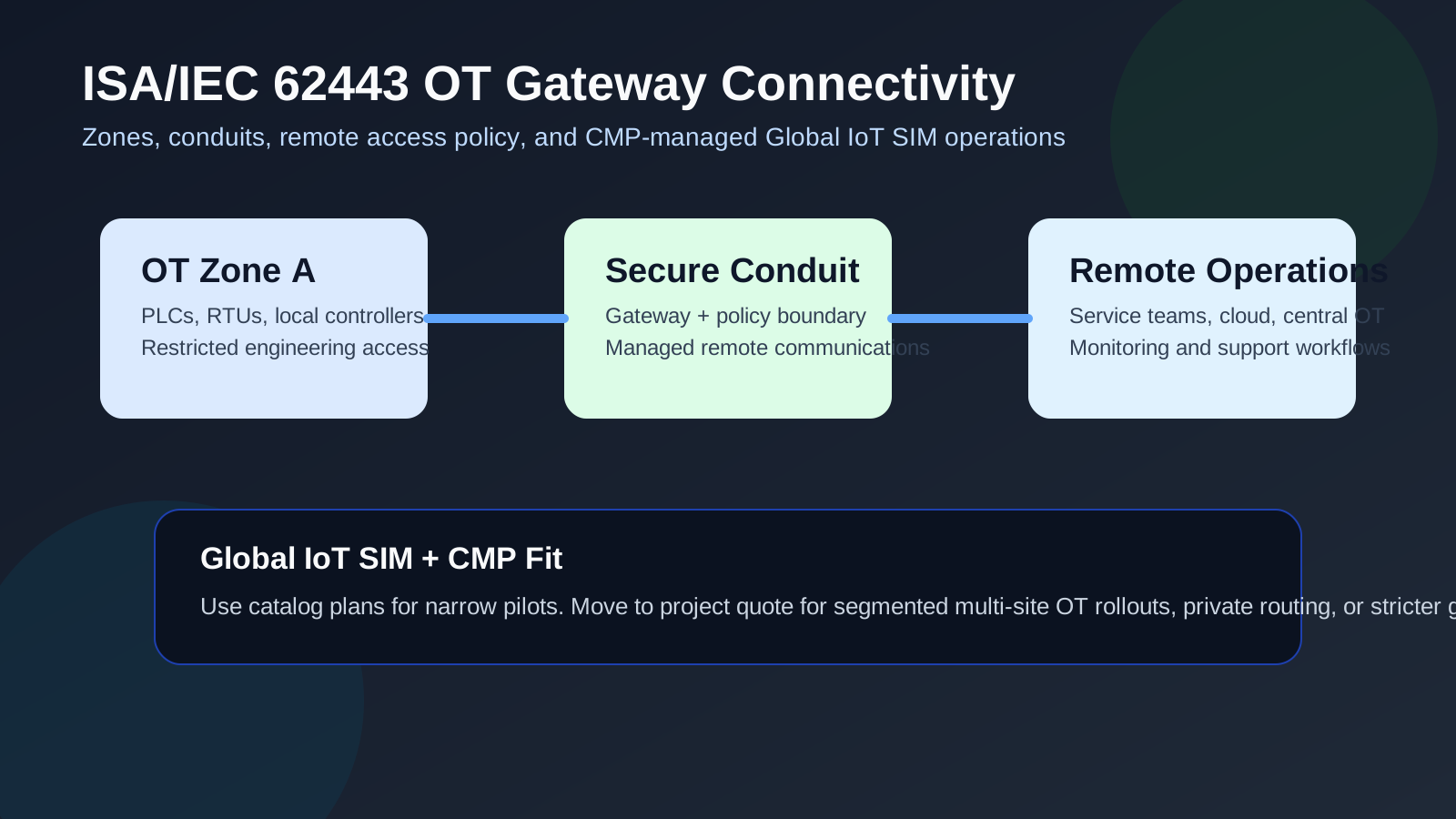
The ISA/IEC 62443 family defines requirements and processes for implementing and maintaining electronically secure industrial automation and control systems. ISA describes the series as a holistic cybersecurity framework for industrial automation and control systems, and its training materials emphasize shared responsibility, security levels, industrial protocols, patch management, and the zone-and-conduit model. That makes the standard directly relevant to buyers who need remote OT access without breaking local security assumptions.
Why It Matters
Many industrial programs now connect PLC panels, RTU cabinets, energy assets, building controllers, and machine gateways back to cloud or central operations platforms. Once that happens, the mobile backhaul path becomes part of the system boundary. In procurement terms, the buyer is no longer only choosing data volume or unit price. They are choosing how remote access, activation control, site expansion, and supplier coordination will behave through the lifecycle of the deployment.
ISA states that the 62443 series helps asset owners determine the level of security required for their business and risk needs and provides a common set of requirements for asset owners, product suppliers, integrators, and service providers. That is exactly why SIM decisions in OT projects should map to who controls the gateway, who operates the fleet, and who approves remote connectivity changes.
Typical Applications
- Segmented industrial sites where a secure conduit is needed between field assets and remote engineering or monitoring teams.
- Energy, water, and building projects that use distributed gateways with formal OT governance requirements.
- OEM or integrator programs that must offer remote support without bypassing customer security architecture.
- Multi-site industrial rollouts that need consistent activation and change control across many gateways.
Related guides include IoT SIM for IEC 60870-5-104 telecontrol RTUs and SCADA backhaul, IoT SIM for BACnet/SC hubs and building network backhaul, and IoT SIM for LwM2M device management and FOTA rollouts.
Selection Notes
The first question is scope. If a buyer only has a narrow pilot with one or two gateways and no cross-border deployment, a standard Global IoT SIM plan may be enough to get the project online. But once the program adds formal security review, multiple locations, customer-specific remote access rules, or more than one operating party, the commercial and operational model becomes more important than unit price alone.
The second question is lifecycle control. A zoned OT deployment often needs a clearer separation between installed hardware, remote support, and connectivity status. That is where CMP-managed SIM operations become useful: teams can control activations, review usage, suspend idle assets, and keep remote access inventory aligned with actual field deployments. If hardware rollout makes physical SIM swaps difficult, eSIM may also be the cleaner long-term path.
A project quote is generally appropriate when the buyer needs multi-country governance, custom routing expectations, rollout staging, coordinated support between OEM and end customer, or industrial procurement review tied to security design. In those cases, connectivity should be scoped together with operational responsibility, not bolted on later.
How This Maps to Quanqiu IoT
- Global IoT SIM: fits standards-aware pilots and international industrial gateway fleets.
- eSIM: useful where field replacement is difficult or future provisioning flexibility matters.
- CMP: supports activation visibility, usage tracking, and lifecycle operations for remote OT gateways.
- Project quote workflow: best when the deployment includes custom governance, larger rollout batches, or more complex remote access requirements.
For broader industrial buyer guidance, see industrial and energy IoT SIM, support, and quote process.
FAQ
Why is ISA/IEC 62443 relevant to IoT SIM buying?
Because the standard family affects segmentation, risk treatment, stakeholder roles, and remote access governance. Connectivity for industrial gateways should fit that model rather than behave like an unmanaged consumer data purchase.
Does every 62443-aligned project need a custom quote?
No. Small pilots can still fit catalog plans. A custom quote becomes more appropriate once the project adds multi-site rollout, formal governance review, custom routing expectations, or larger deployment complexity.
What does CMP add in a zoned OT deployment?
CMP adds operational control: activation management, usage visibility, suspension options, and cleaner lifecycle oversight for distributed industrial assets.
Who should read this page?
Procurement managers, OEM program teams, system integrators, OT engineering leads, and industrial service providers evaluating remote connectivity under a standards-aware cybersecurity model.